
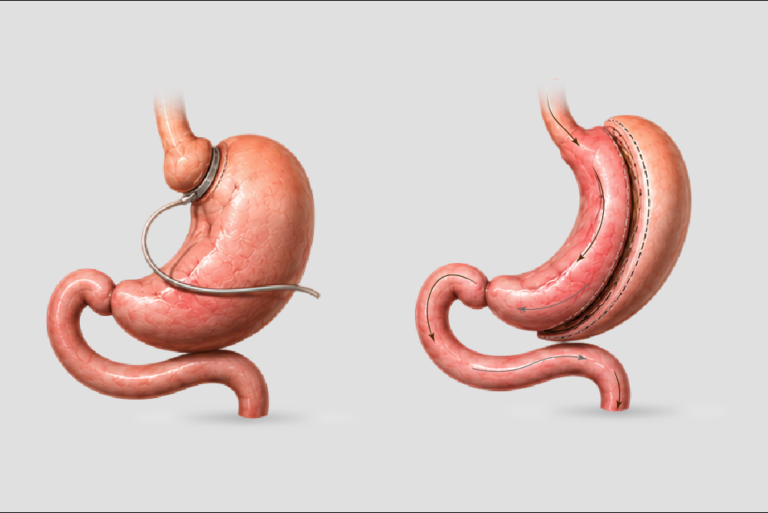
Lap-Band® vs. Gastric Sleeve: Choosing the Right Path for Long-Term Weight Success  - Lap-band

Lap-Band® vs. Gastric Sleeve: Choosing the Right Path for Long-Term Weight Success 

Written by : Michael Dyess, PhD, RN
Published Date : October 7, 2026
Lap-Band® vs. Gastric Sleeve: Choosing the Right Path for Long-Term Weight Success 

Is Lap-Band® or Gastric Sleeve better for weight loss?  

Quick Answer 

Both the Laparoscopic Adjustable Gastric Band (LAGB) and the Gastric Sleeve (LSG) are effective tools for managing severe obesity, but they offer different advantages. Recent clinical reviews indicate that the Lap‑Band remains a safe, effective, and durable option for long-term weight loss, particularly for patients seeking a less invasive, adjustable approach. While the Gastric Sleeve is widely performed, it is a permanent procedure associated with high rates of acid reflux and potential weight recurrence over time [1,2]

Key Facts Summary Box [1,2,3] 

What are Gastric Sleeve and Lap-Band Procedures? 

Obesity is a chronic, relapsing disease that requires a sustainable, long-term management strategy. The Lap-Band involves placing an adjustable silicone ring around the upper stomach to create a small pouch, which can be tailored to the patient’s needs through saline adjustments. In contrast, the Gastric Sleeve is a restrictive procedure where roughly 80% of the stomach is permanently removed using surgical staples. Because the Lap-Band does not involve stapling or cutting the stomach tissue, it is often viewed as a valid surgical option for those prioritizing safety and adjustability [4,5] 

Why Does the Lap-Band Remain a Durable Long-Term Option? 

Despite the rising popularity of other procedures, the Lap-Band has demonstrated significant staying power in long-term clinical settings. A decade-long study of the Lap-Band found it to be a safe and effective option, with only one-fifth of reoperations being related to inadequate weight loss. This suggests that for most patients, the band serves as a reliable, permanent tool for weight control. Furthermore, early weight loss success is a strong predictor of long-term outcomes; patients who achieve a total weight loss of over 20% in their first year with the band have a high probability of maintaining that success for 8 to 12 years [1,4] 

What are the Limitations of the Gastric Sleeve? 

While the Gastric Sleeve is frequently performed, patients must consider its long-term clinical challenges. Research indicates that the Gastric Sleeve is associated with a 51.1% risk of pathological acid reflux and potential development of Barrett’s esophagus. Additionally, “sleeve dilation” where the stomach tube stretches over time is a primary cause of weight regain. Studies have shown that up to 75% of sleeve patients may experience weight recurrence, frequently necessitating a second, more complex “conversion” surgery to Roux-en-Y Gastric Bypass to manage reflux or insufficient weight loss [2,3,5] 

How is Patient Quality of Life Impacted? 

Bariatric surgery is designed to improve a patient’s health-related quality of life (HRQoL) by reducing comorbidities like type 2 diabetes and hypertension. While both procedures lead to significant weight reduction, the Lap-Band offers a unique advantage in its ability to be adjusted. If a patient experiences discomfort or requires nutritional changes such as during pregnancy, the band can be loosened without the need for invasive revisional surgery. Gastric Sleeve patients, however, may face permanent gastrointestinal alterations and a higher burden of chronic reflux management [3,5,6] 

To get in touch with a Lap-Band Surgeon, visit: www.lapband.com/find-a-surgeon/

Frequently Asked Questions

Yes. Peer-reviewed studies confirm that the Lap-Band remains a safe surgical option with long-term durability. It avoids the risks associated with stomach stapling and intestinal rerouting. [1]
Weight recurrence is a recognized challenge with the Gastric Sleeve, with some data suggesting up to a 15-50% failure rate over time. This is often caused by stomach sleeve dilating or stretching. [2,5]
Yes, clinical trials have found that pathological acid reflux occurs in over 51% of patients following a sleeve gastrectomy. [3]
Patients often choose the Lap-Band because it is adjustable, reversible, and does not require permanent removal of stomach tissue. It also avoids the higher risk of reflux associated with the sleeve. [4]
One of the band’s greatest strengths is its adjustability. Your surgeon can add saline to the band to increase restriction and restart your weight loss journey without further surgery. [5]

References

  1. Nasri, B. N., Trainor, L., & Jones, D. B. (2022). Laparoscopic adjustable gastric band remains a safe, effective, and durable option for surgical weight loss. Surgical Endoscopy, 36(10), 7781-7788. https://doi.org/10.1007/s00464-022-09278-8
  2. Fehervari, M., et al. (2023). Weight loss specific to indication, remission of diabetes, and short-term complications after sleeve gastrectomy conversion to Roux-en-Y gastric bypass. Surgery for Obesity and Related Diseases, 19(4), 384–395. https://doi.org/10.1016/j.soard.2022.11.004
  3. Hauge, J. W., et al. (2025). Effect of gastric bypass versus sleeve gastrectomy on the remission of type 2 diabetes, weight loss, and cardiovascular risk factors at 5 years (Oseberg). Lancet Diabetes & Endocrinology, 13(5), 397-409. https://doi.org/10.1016/S2213-8587(24)00396-6
  4. Silveira, F. C., et al. (2021). First-year weight loss following gastric band surgery predicts long-term outcomes. ANZ Journal of Surgery, 91(11), 2443-2446. https://doi.org/10.1111/ans.17233
  5. Nduma, B. N., et al. (2023). Endoscopic Gastric Sleeve: A Review of Literature. Cureus, 15(3), e36353. https://doi.org/10.7759/cureus.36353
  6. Dixon, J., Dixon, M., & O’Brien, P. (2001). Pregnancy after Lap-Band Surgery: Management of the Band to Achieve Healthy Weight Outcomes. Obesity Surgery, 11, 59-65. https://doi.org/10.1381/096089201321454123

The Latest

View all blogs
Important Lap-Band® System Safety Information

The Lap-Band Systems are approved for adults with a Body Mass Index (BMI) of 40 or higher, or a BMI of at least 30 with health conditions related to obesity, who have not seen success with other weight loss methods, like supervised diet, exercise, and behavior modification programs. Choosing this surgery means committing to changes in eating habits for the long term.

The Lap-Band procedure is not approved for individuals under 18 yo, those with conditions that may make them poor surgical candidates or lead to poor results, such as inflammatory or cardiopulmonary diseases, problems with the stomach and digestion, symptoms or family history of autoimmune disease, scarring of the liver, individuals unable or unwilling to follow the necessary dietary restrictions, individuals with alcohol or drug addictions, or those currently pregnant. Individuals who become pregnant after band placement may require deflation of their bands.

The Lap-Band Systems, a long-term tool, may need to be adjusted if you get pregnant, sick, or malnourished. Be careful with anti-inflammatory drugs as they could make the band wear away. Like any surgery, placement of the Lap-Band may have complications such as risks from drugs and methods used, general surgery risks, how well your body handles a foreign object, or in rare cases, risk of death.

As with any surgical procedure, there are risks associated with metabolic and bariatric surgery that you and your doctor should discuss. Potential risks associated with the Lap-Band include nausea, vomiting, heartburn, stomach blockage, constipation, swallowing difficulty, diarrhea, abnormal stools, abdominal pain, weakness, incision pain, infection, fever, hernia, chest pain, band movement, stomach pouch expansion, unusual healing, pain at the port site, port movement, and/or hair loss. Additional surgery might be needed. Losing weight quickly could lead to complications requiring more surgery. 

Talk to your doctor, and/or visit our website at www.lapband.com/safety/ for more information on its benefits and risks.

CAUTION: Rx Only