
Is Lap-Band® or Gastric Sleeve better for weight loss? Quick Answer Both the Laparoscopic Adjustable Gastric Band (LAGB) and the Gastric Sleeve (LSG) are effective tools for managing severe obesity, but they offer different advantages. Recent clinical reviews indicate that the Lap‑Band remains a safe, effective, and durable option for long-term weight loss, particularly for […]

Published by Michael

Lap-Band® vs. Gastric Sleeve: Choosing the Right Path for Long-Term Weight Success
Read More

Obesity Causes: Why do Some People Have Obesity?
Read More
Quick Summary: Obesity — A Silent Metabolic Disease Classification of Weight Status and Disease Risks* Weight Status BMI (kg/m²) Disease Risk Underweight <18.5 — Healthy Weight 18.5–24.9 — Overweight 25.0–29.9 Increased Class I Obesity 30.0–34.9 High Class II Obesity 35.0–39.9 Very High Class III Obesity ≥40 Extremely High Obesity Types according to fat distribution Obesity Type Fat Distribution Risk Level […]

Overweight vs. Obesity – What’s the Difference?
Read More
Quick Summary: If you’ve ever stepped on the weighing scale and the number surprised you, you’re not alone. That happens to almost everybody these days. But here’s the thing: “overweight” and “obesity” get thrown around like they mean the same thing, and they don’t. Not even close in terms of health risk. So, what do they actually mean? This post will discuss everything you need to […]

Lap-Band® vs ESG vs Gastric Bypass: Which Option Is Best If You’re Planning Pregnancy?
Read More
If you are considering weight-loss surgery but also hope to have children, there is more to the decision than how much weight you can lose. You also need to consider what the procedure changes, what remains adjustable, and how those changes may matter when you become pregnant. That makes Lap-Band®, endoscopic sleeve gastroplasty (ESG) and […]

Reversible vs. Irreversible Weight-Loss Surgery: What Is the Difference?
Read More
Weight-loss treatment can involve lifestyle modification, medications, endoscopic procedures, or metabolic and bariatric surgery. Surgical treatment includes several procedures that differ considerably in how they change the stomach and intestine, as well as in their expected weight-loss and metabolic effects.1 One distinction that is particularly relevant when considering surgery is whether the anatomical changes are adjustable and removable […]
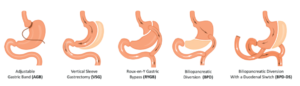
Adjustable vs Non-Adjustable Bariatric Procedures: Understanding the Difference
Read More
Bariatric surgery is not a single type of intervention. Different procedures modify the digestive system in different ways, and these differences influence how weight loss is achieved, the extent of anatomical change, and the follow-up required after surgery. 1 Key takeaways Adjustable gastric banding allows postoperative modification of restriction based on the patient’s response and tolerance. Unlike sleeve gastrectomy or gastric […]