
Is Lap-Band® or Gastric Sleeve better for weight loss?
Quick Answer
Both the Laparoscopic Adjustable Gastric Band (LAGB) and the Gastric Sleeve (LSG) are effective tools for managing severe obesity, but they offer different advantages. Recent clinical reviews indicate that the Lap‑Band remains a safe, effective, and durable option for long-term weight loss, particularly for patients seeking a less invasive, adjustable approach. While the Gastric Sleeve is widely performed, it is a permanent procedure associated with high rates of acid reflux and potential weight recurrence over time [1,2]
Key Facts Summary Box [1,2,3]
| Feature | Laparoscopic Adjustable Gastric Band (LAGB) | Gastric Sleeve (LSG) |
| Primary Mechanism | Adjustable restriction via silicone band | Permanent stapled resection of the stomach |
| Long-term Durability | Effective for most patients over a decade | High risk of weight recurrence (up to 75%) |
| Complication Risk | Band slippage/prolapse (manageable) | Pathological acid reflux (51.1% incidence) |
| Reversibility | fully reversible and adjustable | Permanent and non-reversible |
| Clinical Strategy | Durable long-term tool | often requires conversion to bypass |
What are Gastric Sleeve and Lap-Band Procedures?
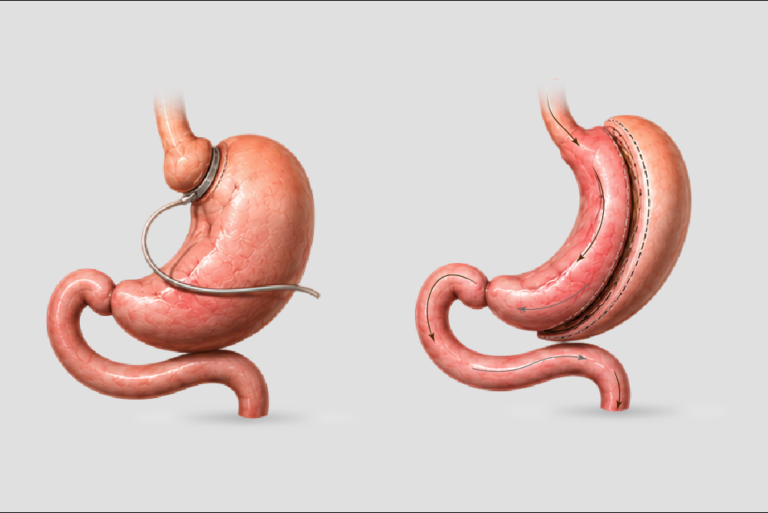
Obesity is a chronic, relapsing disease that requires a sustainable, long-term management strategy. The Lap-Band involves placing an adjustable silicone ring around the upper stomach to create a small pouch, which can be tailored to the patient’s needs through saline adjustments. In contrast, the Gastric Sleeve is a restrictive procedure where roughly 80% of the stomach is permanently removed using surgical staples. Because the Lap-Band does not involve stapling or cutting the stomach tissue, it is often viewed as a valid surgical option for those prioritizing safety and adjustability [4,5]
Why Does the Lap-Band Remain a Durable Long-Term Option?
Despite the rising popularity of other procedures, the Lap-Band has demonstrated significant staying power in long-term clinical settings. A decade-long study of the Lap-Band found it to be a safe and effective option, with only one-fifth of reoperations being related to inadequate weight loss. This suggests that for most patients, the band serves as a reliable, permanent tool for weight control. Furthermore, early weight loss success is a strong predictor of long-term outcomes; patients who achieve a total weight loss of over 20% in their first year with the band have a high probability of maintaining that success for 8 to 12 years [1,4]
What are the Limitations of the Gastric Sleeve?
While the Gastric Sleeve is frequently performed, patients must consider its long-term clinical challenges. Research indicates that the Gastric Sleeve is associated with a 51.1% risk of pathological acid reflux and potential development of Barrett’s esophagus. Additionally, “sleeve dilation” where the stomach tube stretches over time is a primary cause of weight regain. Studies have shown that up to 75% of sleeve patients may experience weight recurrence, frequently necessitating a second, more complex “conversion” surgery to Roux-en-Y Gastric Bypass to manage reflux or insufficient weight loss [2,3,5]
How is Patient Quality of Life Impacted?
Bariatric surgery is designed to improve a patient’s health-related quality of life (HRQoL) by reducing comorbidities like type 2 diabetes and hypertension. While both procedures lead to significant weight reduction, the Lap-Band offers a unique advantage in its ability to be adjusted. If a patient experiences discomfort or requires nutritional changes such as during pregnancy, the band can be loosened without the need for invasive revisional surgery. Gastric Sleeve patients, however, may face permanent gastrointestinal alterations and a higher burden of chronic reflux management [3,5,6]