
Quick Summary:
Obesity — A Silent Metabolic Disease
- Obesity is more than just weight gain.
- It is a chronic metabolic disease.
- It occurs when excess body fat accumulates to a level that affects overall health.
- A Body Mass Index (BMI) of ≥30 kg/m² is classified as obesity.
- Contrary to popular belief, obesity is not a lack of willpower. It is a complex medical condition influenced by genetics, hormones, metabolism, lifestyle, sleep, stress, medications and environmental factors.
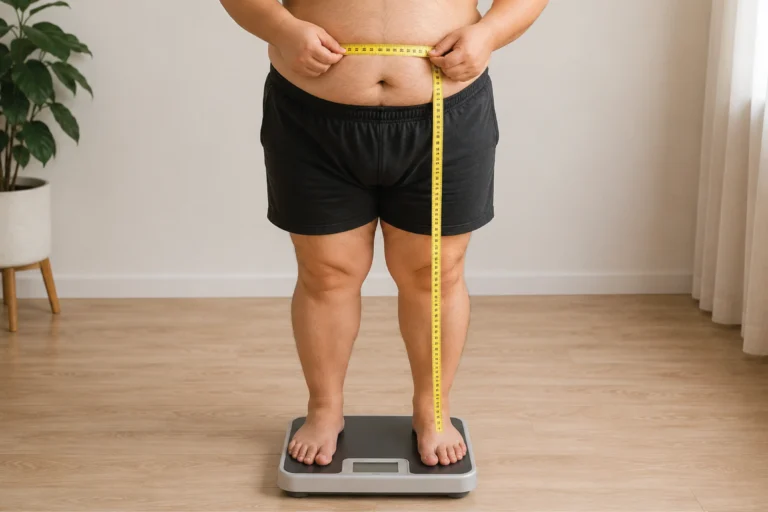
- The WHO (World Health Organization)defines overweight as a BMI of 25–29.9 kg/m² and obesity as a BMI of ≥30 kg/m².1 While BMI is widely used to assess body weight, fat distribution in abdominal (apple-shaped) and pear-shaped obesity is better assessed by waist-to-hip ratio, which is a stronger predictor of health risks.
Classification of Weight Status and Disease Risks*
| Weight Status | BMI (kg/m²) | Disease Risk |
| Underweight | <18.5 | — |
| Healthy Weight | 18.5–24.9 | — |
| Overweight | 25.0–29.9 | Increased |
| Class I Obesity | 30.0–34.9 | High |
| Class II Obesity | 35.0–39.9 | Very High |
| Class III Obesity | ≥40 | Extremely High |
Obesity Types according to fat distribution
| Obesity Type | Fat Distribution | Risk Level |
| Central (abdominal/apple-shaped) Obesity | Fat mainly around the abdomen and waist. | Highest metabolic risk – diabetes, heart disease, stroke, fatty liver |
| Peripheral (pear-shaped) Obesity | Fat mainly around the hips, thighs, and buttocks. | Lower metabolic risk compared with abdominal obesity, but may increase joint problems. |
Obesity Symptoms: How Can One Identify Obesity?
The most visible sign of obesity is excess body fat ,often mistakenly attributed to a lethargy lack of energy, but there are various underlying factors that cause the following symptoms.
- Excess weight
- Shortness of breath
- Easy fatigue
- Snoring
- Joint pain
- Low self-esteem
- Depression
- Metabolic problems
- Difficulty in walking ,climbing stairs, and day-to-day activities
Obesity Causes: Why Do Some People have Obese?
Obesity is usually a multifactorial, chronic disease3.
In some cases, a single dominant factor drives the weight gain; more often, several factors interact.
The root causes are as follows:
- Genetics — Some people are naturally more prone to weight gain due to inherited genes; rare cases involve a single faulty gene causing severe childhood obesity.
- Hormone imbalance (leptin resistance) — The brain stops responding properly to leptin, the hormone that signals fullness, so hunger never really switches off.
- Epigenetics — Environment and lifestyle can “switch on” weight-gain genes, and this effect can even be passed down to children.
- Physical inactivity — Sedentary jobs, screens, and less daily movement mean fewer calories burned than the body expects.
- Diet and insulin spikes — High-sugar, high-carb diets spike insulin, pushing the body to store fat instead of burning it.
- Obesogenic food environment — Cheap, processed, heavily marketed food makes overeating the easy default.
- Prenatal factors — Maternal obesity, smoking, or gestational diabetes raise a baby’s future obesity risk.
- Early childhood factors — Short infant sleep, shorter breastfeeding, and rapid infant weight gain are linked to obesity later in life.
- Poor sleep — Lack of sleep raises hunger hormones (ghrelin) and stress hormones (cortisol) while lowering fullness signals.
- Medications — Certain antidepressants, antipsychotics, insulin, and steroids can cause weight gain as a side effect.
- Underlying medical conditions — Thyroid problems, Cushing’s syndrome, and PCOS disrupt hormones in ways that promote fat gain.
- Socioeconomic status — Poverty and deprivation are strongly linked to higher obesity rates, though the pattern varies by a country’s wealth.
- Ethnicity — Obesity prevalence differs notably across ethnic groups.
- Psychosocial stress — Chronic stress raises cortisol, encouraging belly fat storage and emotional eating.
- Endocrine-disrupting chemicals — Everyday chemicals like BPA and phthalates can interfere with hormones and promote fat storage.
- Gut microbiome — Imbalances in gut bacteria affect how much energy the body extracts and stores from food.
Health Risks of Obesity: How Can Obesity Affect Your Health?
Obesity can adversely impact morbidity and mortality. Excess adiposity predisposes individuals to complications affecting nearly every organ system. Having obesity since childhood has adverse psychological effects like low school performance, easy fatigue, bullying, and low self-esteem and predisposes them to cardiovascular problems in adulthood. Obesity leads to several serious health problems like type 2 diabetes mellitus, high blood pressure, heart disease, high cholesterol, infertility, stroke, dementia, sleep apnea, joint problems, osteoarthritis, gout, PCOS, gallstones, GERD/reflux oesophagitis, non-alcoholic fatty liver disease (NAFLD), and certain cancers 1,4.
Treatment for Obesity: How Can Obesity Be Treated?
Obesity treatment is individualized and requires consistent support and long-term follow-up.
1. Diet therapy – healthy diet with lean protein, high fiber, and low fat with low glycemic index foods with a calorie deficit of 600-700 kcal/day. 5
Diet plays an important role in the treatment.
2. Proper sleep—getting enough sleep without late-night wakeups will have a good impact on health overall.
3. Physical activity—moderate-intensity aerobic exercise for 150 min/week (or vigorous-intensity exercise for 75 min/week), plus muscle-strengthening activity on 2 or more days per week, and a gradual increase in physical activity (cycling, brisk walking, swimming). 6
Changing the daily sedentary lifestyle and gradually increasing physical activity in day-to-day life will benefit the individual.
4. Behavioral therapy – self-monitoring and SMART goals with lifestyle modification.
Decreasing highly processed food, limiting sugar, and eating healthy outside will also be beneficial.
5. Pharmacological medicines – GLP-1 drugs (avoid in people with a personal or family history of medullary thyroid carcinoma or Multiple Endocrine Neoplasia syndrome type 2 (MEN 2))7 and fat absorption medicines (blocks the fat absorption and passes fat in stool)8. These prescription medicines decrease hunger, cravings, and appetite and increase the feeling of satiety. These medicines require persistent follow-up and monitoring.
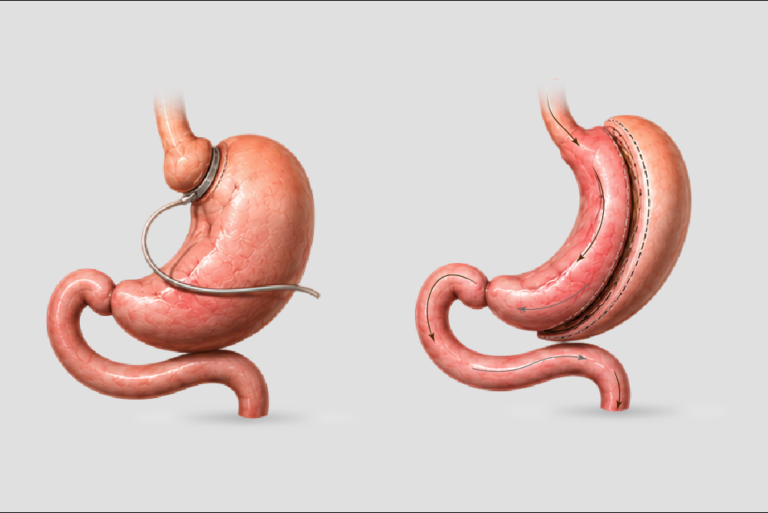
6. Surgery – Bariatric surgeries – Major abdominal surgeries, recommended for BMI ≥35 kg/m² regardless of the presence of obesity-related comorbidities, and considered for BMI 30.0–34.9 kg/m² (Class I obesity) with metabolic disease such as type 2 diabetes, hypertension, or sleep apnea, per updated criteria9. As in bariatric surgeries, the stomach size is reduced, hunger is reduced, and there is an increased feeling of fullness. It causes around 30-35% of weight loss10,11, but on the other hand, it is a major surgery and requires consistent follow-up and lifetime treatment with multivitamins.
The lap band system (adjustable gastric band) is a minimally invasive, reversible option generally reserved for carefully selected, motivated patients who meet standard bariatric-surgery BMI criteria, since results depend heavily on adherence to follow-up and band adjustments. Long-term studies report excess weight loss of roughly 45–50%, but the majority of patients require reoperation or band removal within 10–15 years for erosion, slippage, or inadequate weight loss — which is why gastric banding is now chosen less often than sleeve gastrectomy or gastric bypass12,13.