Introduction
The World Health Organization classifies obesity as a chronic, relapsing, and progressive disease characterised by excessive adipose tissue accumulation, with elevated risk for type 2 diabetes mellitus (T2DM), cardiovascular disease (CVD), and a spectrum of metabolic comorbidities.1 Globally, its prevalence continues to increase, with India alone estimated to have over 254 million individuals in 2021 falling under the generalised obesity criteria.1
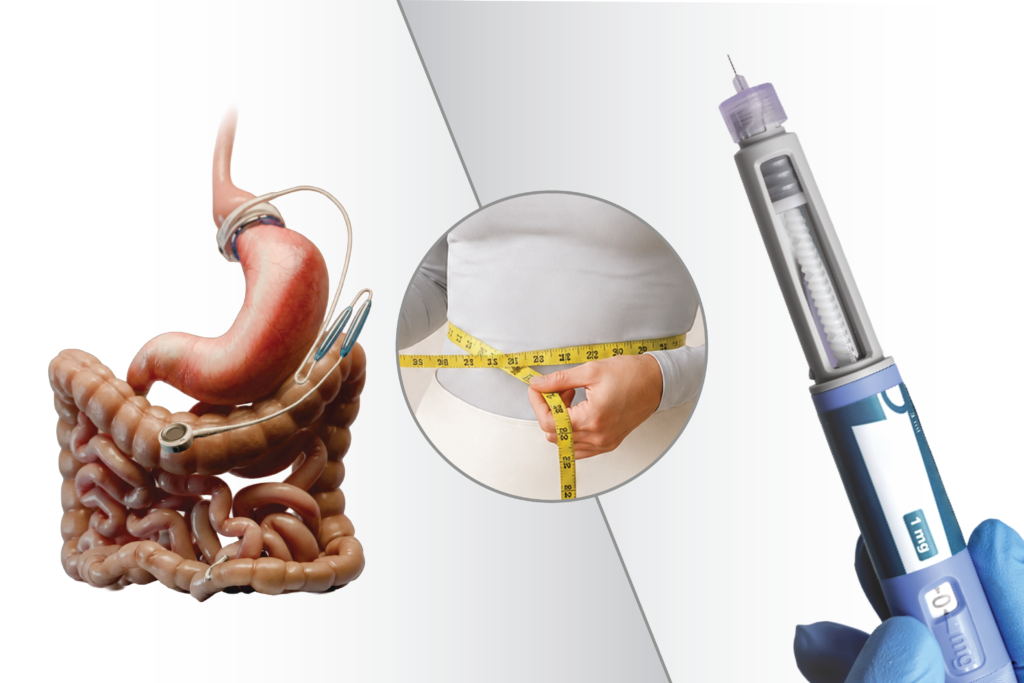
Evolving with this global disease, two interventions have emerged as prominent obesity management strategies
- Ozempic (Semaglutide) a glucagon-like peptide-1 receptor agonist (GLP-1RA)
- Laparoscopic adjustable gastric banding (LAGB) a bariatric procedure
Mechanisms of action
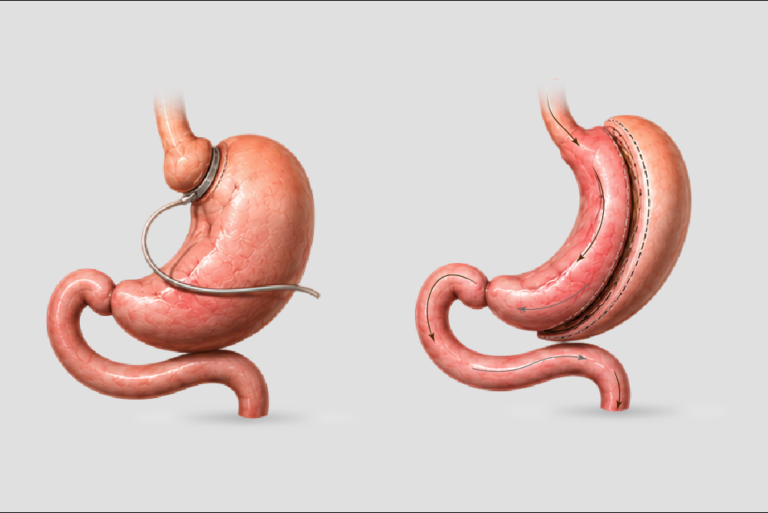
Laparoscopic adjustable gastric banding functions as a purely restrictive bariatric procedure. In this procedure, a calibrated silicone band is surgically positioned around the proximal stomach, forming a small gastric pouch that mechanically limits caloric intake and accelerates satiety signalling.2 A defining clinical feature of this approach is its adjustability and reversibility. These are unique properties among bariatric procedures that allow ongoing titration of restriction based on clinical response and patient need.2
Semaglutide exerts its pharmacological effect via GLP-1 receptor activation within the central nervous system. It stimulates anorexigenic proopiomelanocortin (POMC) and cocaine- and amphetamine-regulated transcript (CART) neurons while concurrently suppressing orexigenic neuropeptide Y (NPY) and agouti-related peptide (AgRP) pathways in the hypothalamic arcuate nucleus collectively reducing appetite and energy intake.3 Notably, this reduction in energy intake occurs without modification of basal metabolic rate.4
Patient eligibility criteria
Laparoscopic adjustable gastric banding: 4,5
- BMI ≥40 kg/m², or ≥35 kg/m² in the presence of severe obesity-related comorbidities
- Demonstrated failure of conservative weight management strategies, including supervised dietary intervention, structured exercise, and behavioural modification programmes
- Patient motivation, psychological fitness, and informed commitment to long-term lifestyle modification
Semaglutide weekly: 6
BMI ≥30 kg/m², or ≥27 kg/m² in the presence of at least one weight-related comorbidity
Comparative weight loss outcomes
A large-scale, real-world retrospective analysis conducted across two major urban health systems (2018-2024) provides the most directly comparable effectiveness data available. Among patients maintaining one year of continuous semaglutide prescriptions, total weight loss (TWL) reached 7.2% (95% CI: 7.0-7.4) at 12 months and 8.0% (95% CI: 7.8-8.2) at 24 months.7 In contrast, sleeve gastrectomy achieved 24.4% TWL at one year, sustained at 22.0% at three years, while Roux-en-Y gastric bypass demonstrated 29.8% TWL at one year, maintained at 28.4% at three years.7
Long-term outcome data for adjustable gastric banding independently report excess weight loss ranging from 33% to 60%,2 which indicates substantial weight reduction while with semaglutide approximately 15% average reduction was reported with 2.4 mg weekly dose.3 Weight loss using semaglutide demonstrates considerable inter-patient variability, ranging from 0% to 40%,3 raising clinically significant questions regarding the predictability of therapeutic response in real-world settings.
Safety profile and complication considerations
Adjustable gastric banding carries the lowest procedure-related mortality of all bariatric interventions ranging from 0.02% to 0.1%.2 Published data further indicates a mortality rate of 1 in 2,000, representing only 10% associated with gastric bypass.8 The 30-day morbidity rate is 3%, with a 12% incidence of late complications including gastric prolapse, band erosion, device malfunction, and band obstruction.2
Adverse events associated with semaglutide include nausea and vomiting representing the most frequently reported events, generally classified as mild-to-moderate in severity.9 However, its broader safety profile includes cholelithiasis, diabetic neuropathy, nasopharyngitis, upper respiratory tract infections, and reported associations with malignant neoplasms.4
Nutritional deficiency following bariatric surgery includes deficiencies in iron, vitamin B12, folate, calcium, and vitamin D requiring structured post-operative monitoring and supplementation.4
Long-term durability and clinical positioning
Evidence suggests that weight-loss effects of semaglutide are dependent on continued administration and outcomes remain significantly below surgical benchmarks even at two to three years of continuous prescribing.7 Cost and accessibility constraints represent additional barriers to sustained real-world use, particularly in resource-limited healthcare settings.9
On the contrary, adjustable gastric banding has been considered as an “optimal initial approach” for the management of obesity and its associated comorbid conditions, specifically due to its adjustability, established safety profile, and reversibility.2,8
Conclusion
For patients meeting surgical eligibility criteria, laparoscopic adjustable gastric banding represents a durable, evidence-based intervention for severe obesity, with a strong safety record, reversibility, and sustained excess weight loss of defining
–60%. Semaglutide remains a viable non-surgical alternative but is constrained by variable response, lean mass effects, and ongoing administration requirements. Treatment selection should be guided by multidisciplinary evaluation and individualised patient profiling. Consultation with a qualified bariatric surgeon is strongly recommended.