
If you are considering weight-loss surgery but also hope to have children, there is more to the decision than how much weight you can lose.
You also need to consider what the procedure changes, what remains adjustable, and how those changes may matter when you become pregnant.
That makes Lap-Band®, endoscopic sleeve gastroplasty (ESG) and gastric bypass very different choices.
For women who want to lose weight while preserving flexibility for a future pregnancy, Lap-Band offers several features worth serious consideration: it does not bypass the stomach, its restriction can be adjusted, and the device can be removed when medically appropriate. [1]
So, how does it compare with ESG and gastric bypass?
Which Is Better for Pregnancy: Lap-Band, ESG or Gastric Bypass?
If pregnancy is part of your future, Lap-Band may be particularly well suited to women who want an adjustable approach without gastric bypass.
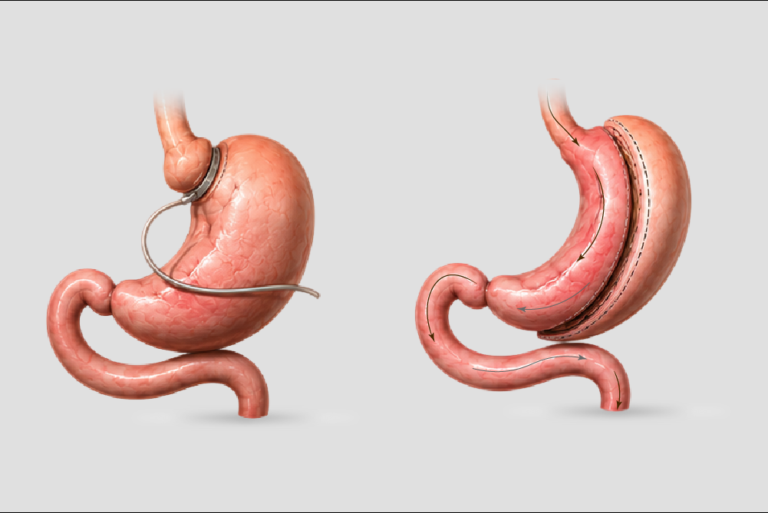
Lap-Band places an adjustable band around the upper stomach to restrict food intake. Unlike gastric bypass, it does not reroute the stomach. Its level of restriction can also be changed over time. [1]
ESG offers another approach that does not involve intestinal bypass. Instead, endoscopes and sutures are used to reduce stomach capacity. It may appeal to women looking for a less invasive, endoscopic procedure, but pregnancy-specific evidence is still limited. [2,3]
Gastric bypass can provide greater weight loss and metabolic benefits, but it permanently changes the digestive anatomy by creating a smaller stomach pouch and rerouting part of the small intestine. That makes nutritional management particularly important before and during pregnancy. [4]
If preserving flexibility around a future pregnancy is a priority, the design of Lap-Band gives it an important advantage to consider.
Why Does Lap-Band Deserve Special Consideration When Planning Pregnancy?
The biggest difference is not simply how much weight each procedure can help you lose. It is what happens to your digestive system afterward.
With Lap-Band, there is no gastrointestinal bypass. The restriction can be adjusted, and the device can be removed when medically appropriate. [1]
That flexibility can matter when pregnancy changes your nutritional needs or food tolerance. If a woman experiences significant vomiting, poor food intake or other concerns during pregnancy, the treating team can reassess the band’s restriction as clinically appropriate. [5]
Gastric bypass offers a different set of benefits, but because it changes gastrointestinal anatomy, nutritional deficiencies such as iron, folate, vitamin B12, vitamin D and calcium require particular attention during pregnancy. [4,5]
ESG also avoids intestinal bypass, but its pregnancy evidence is newer. In one study of 150 women of childbearing age who underwent ESG, 11 became pregnant. Their mean total body weight loss was 18.08% at the beginning of pregnancy and 11.00% at delivery. [3]
The results are encouraging, but the small number of pregnancies means ESG does not yet have the same depth of pregnancy-specific evidence.
Which Has Fewer Pregnancy Risks: Lap-Band, ESG or Gastric Bypass?
There is no single procedure that can be labelled as the safest for every pregnancy.
However, research does provide some reasons why women planning pregnancy may want to consider gastric banding carefully.
A UK national cohort compared 127 pregnancies after gastric banding with 134 after gastric bypass. Women who had gastric banding had lower rates of:
- Anaemia: 16% vs 39%
- Gestational diabetes: 7% vs 16%
- Surgical complications: 0.9% vs 11.4% [2]
For a woman who wants to avoid bypass while retaining an adjustable approach, Lap-Band can therefore be a particularly relevant option to discuss with her bariatric surgeon.
Should I Choose Lap-Band, ESG or Gastric Bypass If I Want Children?
If future pregnancy is important to you, it should influence your procedure of choice from the beginning.
Lap-Band may be especially worth considering if you value:
- Adjustable restriction
- No intestinal bypass
- A removable device
- The ability to reassess restriction as your circumstances change
- Established experience with pregnancy after gastric banding [1,2,5]
ESG may be appropriate if you prefer an endoscopic approach without gastrointestinal bypass, but its pregnancy-specific evidence remains limited.
Gastric bypass may be appropriate when greater weight loss or metabolic improvement is the priority. However, its altered gastrointestinal anatomy means nutritional planning becomes especially important when pregnancy is part of the long-term plan. [4,5]
The decision should still take into account BMI, obesity-related conditions, nutritional status, weight-loss requirements, and reproductive plans.
But if the priority is weight loss with greater flexibility around future pregnancy, Lap-Band offers a combination of features that the other two procedures do not provide in the same way.
Can You Have a Healthy Pregnancy After ESG or Bariatric Surgery?
Yes. Pregnancy is possible after bariatric treatment, but when you become pregnant, matters.
A study of 196 singleton pregnancies after bariatric surgery found that women who conceived within 12 months had a lower average gestational age at delivery (267.1 days vs 272.7 and 273.1 days) and lower average birthweight (2,979 g vs 3,161 g and 3,211 g) compared with women who conceived later. [4]
This supports the common recommendation to avoid pregnancy during the rapid weight-loss phase and allow time for weight stabilization and nutritional preparation. [4,5]
For ESG, early evidence suggests pregnancy is possible, but the available evidence remains based on a small number of pregnancies. [3]
Should I Have Bariatric Surgery Before My Pregnancy?
For some women with obesity, treating obesity before pregnancy may be appropriate. But bariatric surgery should not be viewed as a quick way to lose weight immediately before trying to conceive.
The better approach is to consider weight loss, timing, nutrition, and future pregnancy together.
If you already know that you want children, tell your bariatric surgeon before choosing a procedure. That information can influence which approach makes the most sense for your long-term goals.
And if preserving flexibility is important, Lap-Band may offer a particularly compelling combination of adjustability, no intestinal bypass and removability.
Real Patient Experience: Nicole A. from Kentucky lost 140 pounds after Lap-Band surgery, came off two blood pressure medications, and was no longer pre-diabetic. She also regained the ability to stay active with her children and later had a daughter. Her experience is one example of how Lap-Band patient results can extend beyond weight loss to meaningful changes in everyday life.
The Bottom Line: Why Lap-Band May Be Worth Considering First
There is no procedure that is universally best for every woman planning pregnancy.
But the choice does not have to be based on weight loss alone.
Gastric bypass may offer greater weight loss, but it changes gastrointestinal anatomy and brings greater nutritional considerations. ESG avoids gastrointestinal bypass and offers an endoscopic approach, but pregnancy-specific evidence is still developing.
Lap-Band offers something different: adjustability, no intestinal bypass, and a removable approach.
For women who are planning pregnancy and want a weight-loss option that preserves more flexibility for the future, Lap-Band deserves particularly strong consideration.
The goal is not simply to choose a procedure that works today. It is to choose an approach that fits the life you are planning tomorrow.