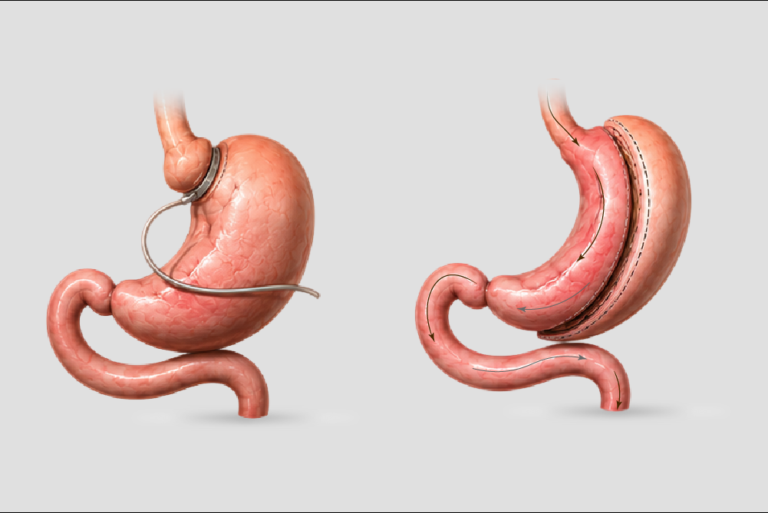
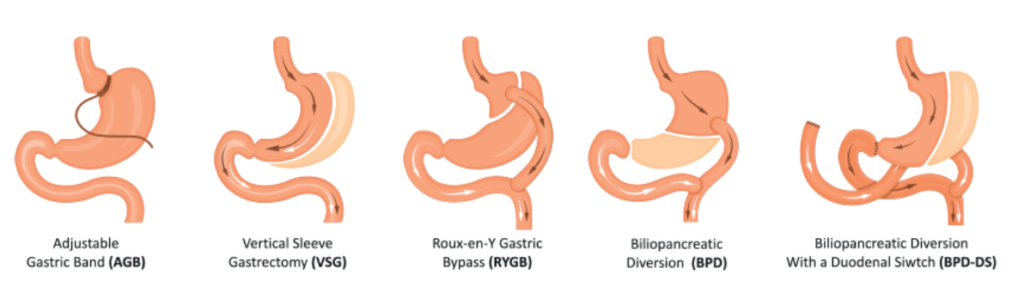
Bariatric surgery is not a single type of intervention. Different procedures modify the digestive system in different ways, and these differences influence how weight loss is achieved, the extent of anatomical change, and the follow-up required after surgery. 1
Key takeaways
- Adjustable gastric banding allows postoperative modification of restriction based on the patient’s response and tolerance.
- Unlike sleeve gastrectomy or gastric bypass, it does not involve stomach resection or intestinal bypass.
- Adjustability offers greater anatomical flexibility but does not necessarily result in greater weight loss.
- The gastric band is both adjustable and removable, whereas most other bariatric procedures involve permanent anatomical changes.
- The choice of procedure should be individualized based on expected weight loss, metabolic benefits, risks, and long-term patient needs.
One important distinction is whether a procedure is adjustable after surgery. Adjustable procedures allow the treatment effect to be modified over time. Non-adjustable procedures create an anatomical change that is not routinely altered after the initial operation.1
What Does “Adjustable” Mean?
In bariatric surgery, adjustability refers to the ability to modify the degree of restriction after the procedure. Adjustable gastric banding is the principal example. 1
During adjustable gastric banding, an inflatable band is placed around the upper portion of the stomach, creating a small pouch above the band. The size of the opening can subsequently be adjusted by injecting or withdrawing saline through a port placed beneath the skin. 1
This means that the level of restriction does not have to remain fixed after surgery. Follow-up visits are required to adjust the band according to the patient’s response and tolerance. 1
What Are Non-Adjustable Bariatric Procedures?
Most other commonly performed bariatric procedures involve anatomical changes that are established during surgery and cannot be modified through a postoperative adjustment mechanism. 1
Sleeve gastrectomy involves removing most of the stomach and leaving a narrow, sleeve-shaped stomach. Because stomach tissue is permanently removed, the procedure cannot be reversed. 1
Roux-en-Y gastric bypass creates a small gastric pouch and connects it to a lower portion of the small intestine, causing food to bypass most of the stomach and upper small intestine. The procedure is difficult to reverse. 1
Other procedures, including biliopancreatic diversion with duodenal switch (BPD/DS) and single-anastomosis duodeno-ileal bypass with sleeve gastrectomy (SADI-S), involve more extensive modification of gastrointestinal anatomy and are not adjustable in the manner of a gastric band. 2
Adjustable vs Non-Adjustable: At a Glance
| Feature | Adjustable gastric banding | Non-adjustable procedures |
| Postoperative adjustment | Yes | No |
| Stomach tissue removed | No | Yes, with sleeve gastrectomy. |
| Intestinal bypass | No | Yes, with gastric bypass, BPD/DS, and SADI-S. |
| Device removable | Yes | Not applicable |
| Anatomical flexibility | Greater | Limited |
| Adjustment visits | Required | Not applicable |
| Weight-loss effect | Generally more modest | Generally greater with sleeve/gastric bypass |
The adjustable gastric band does not involve stomach resection or intestinal bypass and allows postoperative modification of restriction. In contrast, sleeve gastrectomy and gastric bypass involve permanent or difficult-to-reverse anatomical changes. 1, 2
Why Does Adjustability Matter?
The principal clinical difference is flexibility. With an adjustable gastric band, restriction can be increased or decreased after surgery rather than being permanently established at the time of the operation. 1
This approach also avoids intestinal bypass and stomach resection. ASMBS describes adjustable gastric banding as involving no division of the stomach or intestines and notes a lower risk of vitamin and mineral deficiencies than procedures that alter intestinal anatomy. 2
However, adjustability does not mean that the procedure provides greater weight loss. Adjustable gastric banding generally produces a more modest degree of weight loss than procedures such as sleeve gastrectomy and gastric bypass. 2
Evidence from the By-Band-Sleeve randomised controlled trial further demonstrates this difference. At 3 years, at least 50% excess weight loss was achieved by 68.1% of participants assigned to gastric bypass, compared with 41.5% assigned to sleeve gastrectomy and 25.3% assigned to adjustable gastric banding. 3
At 10 years, %EWL was similar between laparoscopic sleeve gastrectomy and adjustable gastric banding (50.1% vs 47.3%, respectively; p=0.88).4
Adjustability Is Not the Same as Reversibility
These two terms are related but should not be confused.
Adjustability means that the treatment effect can be modified after surgery.
Reversibility refers to whether the anatomical changes or the implanted device can be removed or reversed.
Adjustable gastric banding has both characteristics: its restriction can be modified, and the band can be removed when clinically necessary. 1
By contrast, sleeve gastrectomy is neither adjustable nor reversible because part of the stomach has been permanently removed, while gastric bypass is non-adjustable and difficult to reverse. 1
Where Does the Lap-Band® Fit?
The Lap-Band® System represents the adjustable gastric banding approach. It is placed around the upper stomach without removing stomach tissue or bypassing the intestine, and its restriction can be modified through the implanted access port. 1, 2
Its principal distinguishing feature is therefore treatment flexibility, rather than greater weight-loss efficacy. Long-term evidence shows that adjustable gastric banding can produce sustained weight loss, although average weight loss has generally been lower than that reported with gastric bypass and some other bariatric procedures. 4
Choosing Between Adjustable and Non-Adjustable Procedures
The choice of bariatric procedure should not be based on adjustability alone. The appropriate approach should take into account the patient’s clinical circumstances, expected benefits, and potential risks, within the eligibility criteria set out in the 2022 ASMBS/IFSO indications for metabolic and bariatric surgery. 1, 2, 5 The By-Band-Sleeve trial concluded that Roux-en-Y gastric bypass and sleeve gastrectomy are both more effective than adjustable gastric banding, and identified gastric bypass as the most clinically and cost-effective option in that trial. 3
GLP-1 receptor agonist and dual GIP/GLP-1 therapies such as semaglutide and tirzepatide have also changed the treatment landscape. These medications can achieve substantial weight loss without surgery and may be used before surgery, in place of surgery in selected patients, or after surgery where the response has been inadequate. They do not replace metabolic and bariatric surgery in severe obesity, and the choice between medical and surgical treatment should be made with a specialist obesity or bariatric team.
For some patients, the greater anatomical flexibility of an adjustable procedure may be an important consideration. For others, the greater weight-loss and metabolic effects associated with procedures such as gastric bypass or sleeve gastrectomy may carry greater clinical importance. 1, 3
To summarize, adjustable and non-adjustable bariatric procedures represent different approaches rather than simply better and worse versions of weight-loss surgery. The appropriate choice requires balancing expected weight loss, metabolic benefits, anatomical changes, potential complications, and long-term treatment needs.