
Treatment Options Archives - Lap-band

This detailed article teaches us as to how sleeve gastrectomy works, expected weight loss, recovery timeline, benefits, risks, and whether bariatric surgery is right for you.

Introduction 

Sleeve gastrectomy, also known as gastric sleeve surgery, is one of the most commonly performed bariatric procedures worldwide. It helps individuals with obesity achieve significant and sustainable weight loss by reducing stomach size and influencing hunger-regulating hormones. For many people struggling with obesity, weight-related health conditions, and repeated dieting failures, sleeve gastrectomy offers a clinically proven pathway toward improved health and quality of life. Research shows that bariatric surgery can lead to substantial long-term weight reduction while improving conditions such as type 2 diabetes, hypertension, sleep apnea, and cardiovascular risk factors.¹,² 

In this article, we’ll explore how sleeve gastrectomy works, who qualifies, its benefits, risks, recovery process, and how it compares to other weight-loss solutions.

Understanding Sleeve Gastrectomy

Sleeve gastrectomy is a minimally invasive bariatric surgery in which approximately 75%–80% of the stomach is removed, leaving behind a narrow, sleeve-shaped stomach.³

The Mechanism of Action of Sleeve Gastrectomy

Mechanism Effect 
Smaller stomach capacity  Patients feel full after eating in small portions 
Reduced ghrelin production  Leads to decreased hunger & appetite  
Improved metabolic response  Ensures better blood sugar regulation  
Sustainable caloric reduction Supports long term weight loss 

 
Who Is a Candidate for Sleeve Gastrectomy?

According to bariatric surgery guidelines, candidates typically include adults who meet one or more of the following criteria:⁴

BMI Eligibility 

BMI Category Eligibility 
BMI ≥ 40 Eligible regardless of associated conditions 
BMI ≥ 35 Eligible with obesity-related health conditions 
BMI ≥ 30 May qualify if type 2 diabetes is difficult to control

Additionally, patients might also have common obesity-related conditions such as: Type 2 diabetes, high blood pressure, obstructive sleep apnea, heart disease, fatty liver disease, joint and mobility problems. A bariatric surgeon conducts a comprehensive evaluation to determine whether sleeve gastrectomy is the most appropriate treatment option.

Key Benefits of Sleeve Gastrectomy  

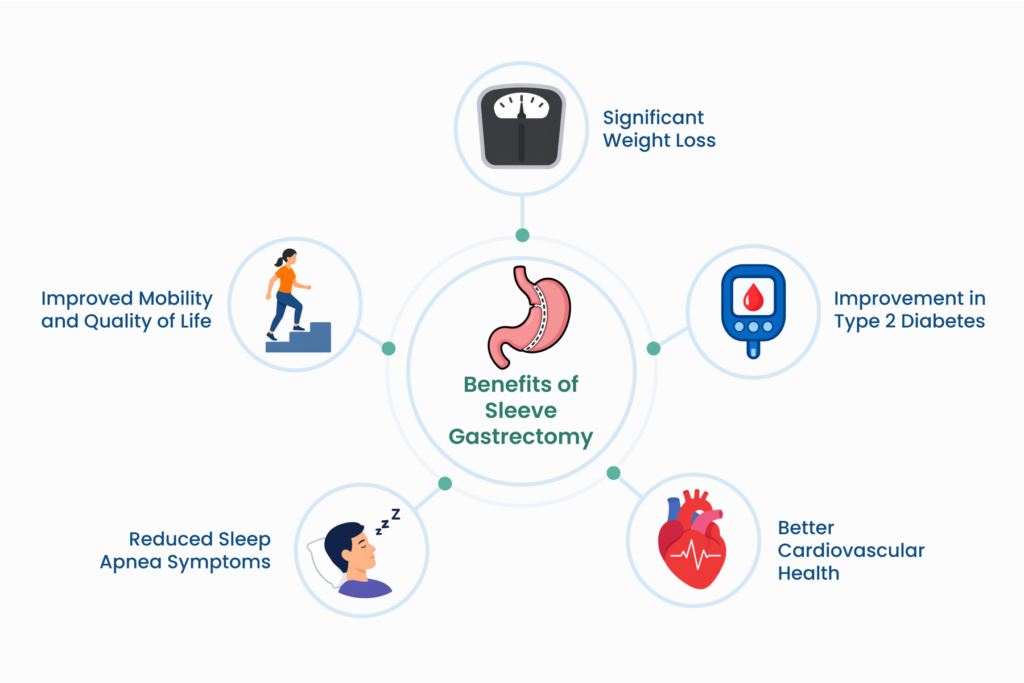
Significant Weight Loss: Patients may lose approximately 60% of excess weight within six months and up to 77% of excess weight within the first year following bariatric surgery. ⁵ 

Improvement in Type 2 Diabetes: Bariatric surgery has demonstrated substantial diabetes remission and improved blood sugar control. Studies have shown remission rates as high as 72% after two years. ⁶ 

Better Cardiovascular Health: Weight-loss surgery is associated with improvements in blood pressure, cholesterol levels, and cardiovascular outcomes. Research has linked bariatric surgery to a reduction in mortality and cardiovascular events. ⁶

Reduced Sleep Apnea Symptoms: Weight reduction following sleeve gastrectomy frequently improves obstructive sleep apnea and overall sleep quality. ⁷

Improved Mobility and Quality of Life: Many patients experience reduced joint pain, increased physical activity, and enhanced emotional well-being following significant weight loss. ⁸ 
Potential Risks and Considerations 

Like all surgical procedures, sleeve gastrectomy carries potential risks. Some of the short-term risks involve; bleeding, infection, blood clots, staple-line leaks, anaesthesia-related complications⁹. The long-term risks are; gastroesophageal reflux disease (GERD), nutritional deficiencies, weight regain, gastric narrowing (stenosis), need for revision procedures.¹⁰,¹¹ It is important to understand that bariatric surgery is a tool and not complete a cure. Long-term success depends on sustained lifestyle modifications and ongoing follow-up care.

Recovery After Sleeve Gastrectomy 

Most patients undergo laparoscopic surgery and return home within one to three days. 

Typical Recovery Timeline 

Time What To Expect 
Week 1 Liquid Diet 
Weeks 2-4 Introduction of Soft Foods  
Month 1 Gradual Return to Routine 
Weeks 6-8 Resume Most Activities 
Months 6-12 Maximum Weight Loss Phase  

Patients receive nutritional counselling, supplementation guidance, and long-term monitoring throughout their journey. 

How Sleeve Gastrectomy Fits Into Long-Term Obesity Care 

Obesity is a chronic disease, not simply a matter of willpower. Modern obesity treatment increasingly recognizes that biological, hormonal, metabolic, and environmental factors all influence body weight. 

For individuals who have struggled to achieve sustainable weight loss through diet, exercise, behavioural therapy, or medications alone, bariatric surgery may provide a medically supported solution. Research consistently demonstrates that metabolic and bariatric surgery produces greater long-term weight loss than non-surgical interventions alone. ²,¹³

Successful outcomes depend on:

  • Nutritional compliance, physical activity, regular medical follow-up, psychological support, lifelong healthy habits 

When integrated into a comprehensive obesity management program, sleeve gastrectomy can serve as a powerful catalyst for lasting health improvements.

Warning Signs: When to Contact Your Doctor 

Seek medical attention immediately if you experience: persistent vomiting, severe abdominal pain, fever above 100.4°F (38°C), chest pain, difficulty swallowing, signs of dehydration, rapid heartbeat, and unusual bleeding. Prompt intervention helps reduce the risk of serious complications. 

Frequently Asked Questions (FAQ) 

  1. Is sleeve gastrectomy permanent? 
    Answer:
     Yes. The portion of the stomach removed during surgery cannot be restored. 
  1. How much weight can I lose with sleeve gastrectomy? 
    Answer: Many patients lose 60–77% of excess body weight during the first year following surgery.⁵ 
  1. Is sleeve gastrectomy safer than gastric bypass? 
    Answer: Both procedures are considered safe when performed by experienced bariatric surgeons. Sleeve gastrectomy is generally less complex because it does not involve intestinal rerouting.³ 
  1. Can weight regain happen after sleeve gastrectomy? 
    Answer: Yes. Weight regain can occur if lifestyle changes are not maintained, making long-term follow-up essential.¹¹ 
  1. Will I need vitamin supplements? 
    Answer: Yes. Most patients require lifelong vitamin and mineral supplementation after bariatric surgery. 
  1. How long does recovery take? 
    Answer: Most patients return to normal daily activities within several weeks, though complete recovery varies by individual. 
  1. Does sleeve gastrectomy cure diabetes? 
    Answer: While not a guaranteed cure, many patients experience significant improvement or remission of type 2 diabetes following surgery. ⁶ 

Conclusion 

Sleeve gastrectomy has transformed the treatment landscape for obesity and obesity-related health conditions. By reducing stomach capacity and influencing appetite-regulating hormones, it helps patients achieve meaningful and sustained weight loss while improving overall health outcomes. For individuals who have struggled with traditional weight-loss methods, bariatric surgery may offer a clinically proven path forward.

If you’re exploring advanced obesity treatment options, Medtimo can help you understand whether bariatric solutions—including Sleeve Gastrectomy or the Lap-Band® system—may be appropriate for your individual health goals. Schedule a consultation with a qualified bariatric specialist to learn more.

References 

  1.  American Society for Metabolic and Bariatric Surgery (ASMBS). Bariatric Surgery Procedures. Available from: https://asmbs.org/patients/bariatric-surgery-procedures/ 
  2. Long-term effectiveness and outcomes of bariatric surgery. [Article title as indexed in PubMed Central]. 2024. Available from: https://pmc.ncbi.nlm.nih.gov/articles/PMC11381104/ 
  3. StatPearls Publishing. Sleeve Gastrectomy. In: StatPearls [Internet]. Treasure Island (FL): StatPearls Publishing. Available from: https://www.ncbi.nlm.nih.gov/books/NBK519035/  
  4. National Institute of Diabetes and Digestive and Kidney Diseases (NIDDK). Potential Candidates for Weight-Loss Surgery. Available from: https://www.niddk.nih.gov/health-information/weight-management/bariatric-surgery/potential-candidates 
  5. American Society for Metabolic and Bariatric Surgery (ASMBS). Metabolic and Bariatric Surgery. Available from: https://asmbs.org/resources/metabolic-and-bariatric-surgery/ 
  6. National Institute of Diabetes and Digestive and Kidney Diseases (NIDDK). Understanding the Health Benefits and Risks of Bariatric Surgery. Available from: https://www.niddk.nih.gov/news/archive/2015/understanding-health-benefits-risks-bariatric-surgery. 
  7. Long-term metabolic outcomes after sleeve gastrectomy. [Article title as indexed in PubMed Central]. Available from: https://pmc.ncbi.nlm.nih.gov/articles/PMC13090202/ 
  8. National Institute of Diabetes and Digestive and Kidney Diseases (NIDDK). Benefits of Weight-Loss Surgery. Available from: https://www.niddk.nih.gov/health-information/weight-management/bariatric-surgery/benefits 
  9. National Institute of Diabetes and Digestive and Kidney Diseases (NIDDK). Weight-Loss Surgery Side Effects. Available from: https://www.niddk.nih.gov/health-information/weight-management/bariatric-surgery/side-effects 
  10. Long-term outcomes of sleeve gastrectomy. [Article title as indexed in PubMed Central]. Available from: https://pmc.ncbi.nlm.nih.gov/articles/PMC11533043/. 
  11. Weight regain after bariatric surgery: a review. [Article title as indexed in PubMed Central]. Available from: https://pmc.ncbi.nlm.nih.gov/articles/PMC9906605/  
  12. American Society for Metabolic and Bariatric Surgery. 2024 Procedure Trends in Metabolic and Bariatric Surgery. Surgery for Obesity and Related Diseases. 2024. Available from: https://www.soard.org/article/S1550-7289%2824%2900036-4/fulltext 
  13. JAMA. Long-Term Medical Management Compared With Bariatric Surgery. Available from: https://jamanetwork.com/journals/jama/fullarticle/2815401 

Copyright © Medtimo. All Rights Reserved.

Introduction 

Sleeve bypass surgery refers to a group of advanced bariatric procedures that combine the restrictive effects of sleeve gastrectomy with the metabolic benefits of intestinal bypass. Unlike traditional sleeve gastrectomy, which focuses primarily on reducing stomach size, sleeve bypass procedures also alter nutrient flow through the intestine to enhance weight loss and improve obesity-related conditions such as type 2 diabetes, hypertension, and metabolic syndrome.1,2,3 

Several sleeve-based procedures are now used in clinical practice: 

  • Sleeve Gastrectomy with Transit Bipartition (SG-TB), which creates an additional pathway for food to reach the lower intestine.  
  • Sleeve Gastrectomy with Jejunal Bypass (SGJB), which combines sleeve gastrectomy with selective intestinal bypass.  
  • Single-Anastomosis Duodeno-Ileal Bypass with Sleeve Gastrectomy (SADI-S), a simplified adaptation of the duodenal switch procedure.  
  • Duodenojejunal Bypass with Sleeve Gastrectomy (DJB-SG), often considered for patients with obesity and type 2 diabetes.  

Although these procedures differ in surgical design, they share a common goal: reducing stomach capacity while harnessing hormonal and metabolic changes that support long-term weight loss and improved metabolic health. 

Among the various bariatric procedures available today, gastric bypass surgery remains one of the most extensively studied and widely performed operations worldwide, with decades of clinical evidence supporting its effectiveness and safety profile.4  

Understanding the sleeve bypass procedure 

A sleeve bypass begins with a sleeve gastrectomy, during which approximately 70–80% of the stomach is removed, leaving a narrow, sleeve-shaped stomach. Unlike standalone sleeve gastrectomy, an additional intestinal bypass component is incorporated to enhance hormonal and metabolic effects.1,3 

This dual approach aims to: 

  • Reduce food intake 
  • Promote earlier satiety 
  • Improve glucose metabolism 
  • Enhance weight-loss outcomes 
  • Improve obesity-related comorbidities 

How does sleeve bypass work? 

Modern bariatric surgery is increasingly recognized as metabolic surgery, and sleeve bypass procedures exemplify this concept. 

Key mechanisms of action and their benefits 

Mechanism Clinical effect 
Sleeve gastrectomy Reduces stomach capacity 
Reduced ghrelin production Decreases hunger 
Enhanced GLP-1 secretion Improves satiety and glucose control 
Increased PYY release Promotes fullness 
Altered nutrient delivery Improves metabolic function 
Intestinal bypass Supports diabetes improvement 

Research suggests that these hormonal changes contribute significantly to weight loss and metabolic improvement, often occurring before substantial weight reduction is observed.3

Benefits of sleeve bypass surgery 

Significant weight loss

Obesity affects more than one billion people globally and remains a leading contributor to chronic disease burden worldwide.5 Studies evaluating sleeve bypass procedures have demonstrated substantial weight loss outcomes, often comparable to or exceeding those observed with conventional bariatric procedures in appropriately selected patients.2 

Improvement in type 2 diabetes 

 One of the major reasons sleeve bypass procedures have gained interest is their metabolic effect. 

By delivering nutrients more rapidly to distal portions of the intestine, these procedures stimulate gut hormones involved in glucose regulation. Several studies have reported significant improvements in glycemic control and diabetes remission rates following sleeve-based bypassoperations.3

Improvement in obesity related symptoms 

Patients may also experience improvements in hypertension, dyslipidemia, obstructive sleep apnea, non-alcoholic fatty liver disease, metabolic syndrome. These benefits contribute to overall cardiovascular and metabolic health.

Who qualifies for sleeve bypass surgery? 

Candidate selection is critical to achieving successful outcomes. Patients may be considered suitable candidates if they have the following characteristics: 6,7 

  • BMI ≥40 kg/m² 
  • BMI ≥35 kg/m² with obesity-related health conditions 
  • Inadequate response to non-surgical weight-loss interventions 
  • Motivation to commit to long-term lifestyle changes 

Risks and considerations 

Like all bariatric procedures, sleeve bypass surgery carries potential risks and requires long-term follow-up. Potential early complications include bleeding, infection, leakage from surgical connections, blood clots. Etc. Although uncommon, these complications should be discussed before surgery. 

Because intestinal bypass is involved, nutritional deficiencies of iron, vitamin B12, calcium, proteins may occur. Lifelong supplementation and regular follow-up are essential components of postoperative care.2  

Sleeve bypass vs Gastric bypass 

Patients often ask how sleeve bypass differs from traditional gastric bypass. 

Feature Sleeve Bypass Gastric Bypass (RYGB) 
Sleeve gastrectomy performed Yes No 
Small gastric pouch No Yes 
Pylorus preserved Usually No 
Intestinal bypass Yes Yes 
Diabetes improvement Excellent Excellent 
Long-term evidence Emerging Extensive 

While both approaches are effective, the most appropriate procedure depends on individual patient characteristics, health goals, and surgeon recommendations. 

How bariatric surgery supports long-term health? 

Obesity is increasingly recognized as a chronic disease requiring long-term management. While nutrition, exercise, behavioral modification, and medical therapies remain important, some individuals may require surgical intervention to achieve meaningful and durable results. 

Sleeve bypass procedures represent one of several evidence-based bariatric options available today. By combining anatomical changes with powerful metabolic effects, these procedures may help reduce obesity-related complications and support long-term health outcomes. The optimal procedure should always be selected following a comprehensive evaluation by a qualified bariatricspecialist.3,7,8

When to speak with a Specialist? 

Consider seeking specialist guidance in case of: 

  • Excess weight affecting daily activities or quality of life. 
  • Obesity-related conditions such as diabetes or hypertension. 
  • Unsuccessful multiple weight-loss attempts. 
  • BMI falls within obesity ranges. 
  • Recommendation provided by healthcare provider. 

Early intervention may help reduce the risk of long-term obesity-related complications. 

Conclusion 

Sleeve bypass surgery represents an evolving category of bariatric procedures that combines the restrictive benefits of sleeve gastrectomy with the metabolic advantages of intestinal bypass. By promoting substantial weight loss and improving obesity-related conditions, these procedures have emerged as promising options for carefully selected patients. 

As bariatric surgery continues to evolve, understanding the differences between sleeve bypass, sleeve gastrectomy, and gastric bypass can help patients make informed decisions about their treatment journey. 

CTA 

Interested in understanding the full range of bariatric treatment options?  

Click here to explore additional educational resources on bariatric surgeries and effective devices which can be a suitable option for you. 

FAQs 

Is sleeve bypass the same as sleeve gastrectomy? 

No. Sleeve gastrectomy involves stomach reduction alone, whereas sleeve bypass procedures combine sleeve gastrectomy with an intestinal bypass component. 

Is sleeve bypass the same as gastric bypass? 

No. Sleeve bypass procedures preserve a sleeve-shaped stomach, while Roux-en-Y gastric bypass creates a small stomach pouch and bypasses part of the digestive tract. 

How much weight can you lose after sleeve bypass surgery? 

Weight loss varies among individuals, but substantial and sustained weight reduction has been reported in clinical studies evaluating sleeve-based bypass procedures. 

Can sleeve bypass improve diabetes? 

Yes. Many sleeve bypass procedures have demonstrated significant improvements in blood glucose control and diabetes-related outcomes. 

Will I need vitamin supplements after surgery? 

Yes. Lifelong vitamin and mineral supplementation is generally recommended following bariatric procedures that involve intestinal bypass. 

References 

  1. Sánchez-Pernaute, A., Rubio, M. Á., Cabrerizo, L., Ramos-Levi, A., Pérez-Aguirre, E., & Torres, A. (2015). Single-anastomosis duodenoileal bypass with sleeve gastrectomy (SADI-S) for obese diabetic patients. Surgery for obesity and related diseases : official journal of the American Society for Bariatric Surgery, 11(5), 1092–1098. https://doi.org/10.1016/j.soard.2015.01.024 
  1. Emile, S. H., Mahdy, T., Schou, C., Kramer, M., & Shikora, S. (2021). Systematic review of the outcome of single-anastomosis sleeve ileal (SASI) bypass in treatment of morbid obesity with proportion meta-analysis of improvement in diabetes mellitus. International journal of surgery (London, England), 92, 106024. https://doi.org/10.1016/j.ijsu.2021.106024 
  1. Rubino, F., Nathan, D. M., Eckel, R. H., Schauer, P. R., Alberti, K. G., Zimmet, P. Z., Del Prato, S., Ji, L., Sadikot, S. M., Herman, W. H., Amiel, S. A., Kaplan, L. M., Taroncher-Oldenburg, G., Cummings, D. E., & Delegates of the 2nd Diabetes Surgery Summit (2016). Metabolic Surgery in the Treatment Algorithm for Type 2 Diabetes: A Joint Statement by International Diabetes Organizations. Diabetes care, 39(6), 861–877. https://doi.org/10.2337/dc16-0236 
  1. Manning, S., Pucci, A., & Batterham, R. L. (2015). Roux-en-Y gastric bypass: effects on feeding behavior and underlying mechanisms. The Journal of clinical investigation, 125(3), 939–948. https://doi.org/10.1172/JCI76305 
  1. World Health Organization. (2024). Obesity and overweight. Available from https://www.who.int/news-room/fact-sheets/obesity-and-overweight
  1. Mechanick, J. I., Apovian, C., Brethauer, S., et al. (2020). Clinical Practice Guidelines for the Perioperative Nutrition, Metabolic, and Nonsurgical Support of Patients Undergoing Bariatric Procedures – 2019 Update: Cosponsored by American Association of Clinical Endocrinologists/American College of Endocrinology, The Obesity Society, American Society for Metabolic and Bariatric Surgery, Obesity Medicine Association, and American Society of Anesthesiologists. Obesity (Silver Spring, Md.), 28(4), O1–O58. https://doi.org/10.1002/oby.22719 
  1. Eisenberg, D., Shikora, S. A., Aarts, E., et al. (2023). 2022 American Society of Metabolic and Bariatric Surgery (ASMBS) and International Federation for the Surgery of Obesity and Metabolic Disorders (IFSO) Indications for Metabolic and Bariatric Surgery. Obesity surgery, 33(1), 3–14. https://doi.org/10.1007/s11695-022-06332-1  
  1. Arterburn, D. E., & Courcoulas, A. P. (2014). Bariatric surgery for obesity and metabolic conditions in adults. BMJ (Clinical research ed.), 349, g3961. https://doi.org/10.1136/bmj.g3961  

Discover how GLP-1 medications are transforming obesity management, their benefits and limitations, and how they compare with bariatric interventions such as gastric banding and sleeve gastrectomy. An evidence-based guide to sustainable weight loss.

What if weight loss was not simply about eating less and exercising more? 

For decades, obesity was viewed primarily as a lifestyle issue and a consequence of poor dietary choices or insufficient physical activity. Today, however, medical science recognizes obesity as a chronic, relapsing, and multifactorial disease influenced by genetics, hormones, metabolism, psychology, environment, and lifestyle factors.¹ This shift in understanding has transformed how healthcare professionals approach weight management. Instead of relying solely on diet and exercise, physicians now have access to a growing spectrum of evidence-based interventions, including behavioural therapy, medications, endoscopic procedures, and bariatric surgery.²

Among these innovations, GLP-1 receptor agonists have emerged as one of the most discussed developments in obesity treatment. From physician offices to social media feeds, GLP-1 medications have captured global attention because of their ability to help patients achieve meaningful weight loss while also improving metabolic health.³ But where exactly do GLP-1 therapies fit within the broader obesity-treatment landscape? Are they a replacement for surgical interventions? Are they a lifelong solution? Or are they one component of a larger, personalized treatment strategy? The answers are more nuanced than many headlines suggest.

Understanding the Obesity Epidemic 

Obesity has become one of the most pressing public health challenges worldwide. According to the World Health Organization (WHO), global obesity rates have nearly tripled since 1975, affecting millions of adults and children across developed and developing nations alike. ⁴

The consequences extend far beyond body weight. Obesity is associated with increased risks of: Type 2 diabetes, hypertension, cardiovascular disease, obstructive sleep apnea, non-alcoholic fatty liver disease, osteoarthritis, certain cancers, & reduced quality of life.⁵

Importantly, obesity is increasingly viewed as a disease requiring long-term management rather than a temporary condition requiring short-term treatment. ⁶

What Is GLP-1? 

GLP-1, or Glucagon-Like Peptide-1, is a naturally occurring hormone released by the intestines after food consumption. Its primary function is to help regulate glucose metabolism and appetite. ⁷ GLP-1 influences several physiological processes simultaneously: stimulates insulin secretion, suppresses glucagon release, slows gastric emptying, increases feelings of fullness and reduces hunger signals sent to the brain⁸ GLP-1 receptor agonists are medications designed to mimic the action of this naturally occurring hormone. Originally developed for the treatment of Type 2 diabetes, researchers soon observed substantial weight-loss benefits among patients using these therapies. This observation led to further clinical investigation and eventual approval of specific GLP-1 therapies for obesity management. ⁹

Why GLP-1 Therapies Have Generated So Much Interest 

The excitement surrounding GLP-1 therapies is understandable. Historically, weight-loss medications often produced modest outcomes or were associated with concerns regarding long-term safety and tolerability. Modern GLP-1 therapies have demonstrated clinically significant weight reduction in many patients when combined with lifestyle modifications. ¹⁰

Several factors contribute to their popularity:

Appetite Regulation: Unlike traditional dieting approaches that often require individuals to continuously resist hunger, GLP-1 therapies work through biological pathways that influence satiety and food intake.¹¹ 

Metabolic Benefits: Beyond weight loss, GLP-1 receptor agonists improve glycaemic control and, in selected patients with type 2 diabetes, have demonstrated cardiovascular benefits.¹²

Non-Surgical Treatment Option: For individuals who may not qualify for surgery or who prefer a non-surgical intervention, GLP-1 medications provide an additional treatment pathway under physician supervision.¹³

The Limitations of GLP-1 Therapy 

While GLP-1 medications represent a significant advancement in obesity treatment, they are not a universal solution.

Weight Regain After Discontinuation: Research has demonstrated that some patients may regain a portion of lost weight after discontinuing therapy. Because obesity is a chronic condition, ongoing management is often necessary.¹⁴

Variable Individual Response: Treatment outcomes vary among individuals, highlighting the importance of personalized obesity management and ongoing follow-up.¹⁵

Potential Side Effects: Common side effects may include: nausea, vomiting, diarrhoea, constipation, gastrointestinal discomfort¹⁶ Most side effects are manageable, but physician oversight remains important. 

Cost and Long-Term Commitment: Because obesity is a chronic disease, maintaining weight loss often requires ongoing treatment, regular follow-up, and long-term adherence to the prescribed management plan.¹⁷ 

Comparing GLP-1 Therapy with Bariatric Interventions 

One of the most common questions patients ask is whether GLP-1 medications can replace bariatric surgery. The reality is that these treatment modalities serve different clinical purposes and patient populations.¹⁸ Rather than competing solutions, they are increasingly viewed as complementary tools within the obesity-treatment spectrum.

Lifestyle Modification: The Foundation of Every Weight-Loss Strategy

Regardless of the intervention selected, sustainable weight management begins with lifestyle modification.

Key components include: 

  • Balanced nutrition 
  • Regular physical activity 
  • Sleep optimization 
  • Stress management 
  • Behavioral counseling¹⁹ 

Neither medications nor surgery eliminate the importance of these foundational practices.

GLP-1 Therapy: A Pharmacological Approach

GLP-1 therapies may be considered for patients who: ²⁰

BMI Eligibility 
≥30 kg/m² Eligible based on obesity alone. 
27.0–29.9 kg/m² Eligible if you have at least one weight-related medical condition. 
For many individuals, these medications represent an important step between lifestyle intervention and surgical treatment.

Bariatric Procedures: Structural and Metabolic Interventions 

Bariatric procedures remain among the most effective long-term treatments for severe obesity and obesity-related comorbidities.²¹ 

Common interventions include: 

Sleeve Gastrectomy: A procedure that reduces stomach volume and influences hormonal pathways related to hunger and satiety.²²

Gastric Bypass: A procedure that alters both stomach anatomy and digestive pathways, resulting in significant weight-loss and metabolic benefits.²³

Adjustable Gastric Banding: Adjustable gastric banding involves placing a band around the upper portion of the stomach to help patients control portion sizes and support gradual, sustainable weight loss. Unlike irreversible procedures, gastric banding offers adjustability and reversibility, making it an option that may appeal to selected patients seeking a personalized surgical approach.²⁴

The Future of Obesity Treatment: Personalized Care

Perhaps the most important lesson from modern obesity medicine is that no single treatment works for everyone.

Increasingly, healthcare professionals are adopting personalized care pathways that may combine: 

  • Nutrition counseling 
  • Behavioral therapy 
  • Physical activity programs 
  • GLP-1 medications 
  • Bariatric interventions 
  • Long-term follow-up care²⁵ 

In some cases, medications may serve as a bridge to surgery. In others, surgical interventions may be supplemented by medical therapies to support long-term success. The future is not about choosing one intervention over another; it is about matching the right intervention to the right patient at the right time. 

Conclusion

GLP-1 therapies have fundamentally changed the obesity-treatment conversation. They have demonstrated that targeting biological pathways involved in appetite regulation can help patients achieve meaningful weight loss while improving overall metabolic health.²⁶ Yet, obesity remains a chronic disease requiring long-term management and individualized care. While GLP-1 medications provide a valuable treatment option, they are not the only option. Lifestyle modification remains essential, and bariatric interventions including sleeve gastrectomy, gastric bypass, and adjustable gastric banding, continue to play an important role in comprehensive obesity management.²⁷

The most effective treatment is rarely the newest or most popular. Instead, it is the one that aligns with a patient’s health profile, medical needs, personal preferences, and long-term commitment to sustainable change. As obesity medicine continues to evolve, patients have more evidence-based options than ever before making informed decision-making, physician guidance, and personalized care the true cornerstones of successful weight management.

References 

  1. World Obesity Federation. About obesity [Internet]. London: World Obesity Federation; [cited 2026 Jul 29]. Available from: About Obesity | World Obesity Federation   
  2. American Society for Metabolic and Bariatric Surgery. For patients [Internet]. Newberry (FL): American Society for Metabolic and Bariatric Surgery; [cited 2026 Jul 29]. Available from: https://asmbs.org/patients/benefits-of-metabolic-and-bariatric-surgery/   
  3. National Institute of Diabetes and Digestive and Kidney Diseases. Weight management [Internet]. Bethesda (MD): National Institute of Diabetes and Digestive and Kidney Diseases, National Institutes of Health; [cited 2026 Jul 29]. Available from: https://www.niddk.nih.gov/health-information/weight-management  
  4. World Health Organization. Obesity and overweight [Internet]. Geneva: World Health Organization; 2025 Dec 8 [cited 2026 Jul 29]. Available from: https://www.who.int/news-room/fact-sheets/detail/obesity-and-overweight  
  5.  Centers for Disease Control and Prevention. Adult obesity facts [Internet]. Atlanta (GA): Centers for Disease Control and Prevention; 2024 May 15 [cited 2026 Jul 29]. Available from: https://www.cdc.gov/obesity/adult-obesity-facts/  
  6. Rubino, F., Cummings, D. E., Eckel, R. H., et al. (2025). Definition and diagnostic criteria of clinical obesity. The lancet. Diabetes & endocrinology, 13(3), 221–262. https://doi.org/10.1016/S2213-8587(24)00316-4  
  7. National Institute of Diabetes and Digestive and Kidney Diseases. Leveraging real-world evidence to assess benefits and risks of GLP-1-based therapies [Internet]. Bethesda (MD): National Institute of Diabetes and Digestive and Kidney Diseases, National Institutes of Health; 2025 May 7–8 [cited 2026 Jul 29]. Available from: https://www.niddk.nih.gov/news/meetings-workshops/2025/leveraging-real-world-evidence-2025  
  8. Cleveland Clinic – GLP-1 Agonists: https://my.clevelandclinic.org/health/treatments/13901-glp-1-agonists. Available from: https://my.clevelandclinic.org/health/treatments/13901-glp-1-agonists 
  9. U.S. Food and Drug Administration. FDA approves new medication for chronic weight management [Internet]. Silver Spring (MD): U.S. Food and Drug Administration; 2023 Nov 8 [cited 2026 Jul 29]. Available from: https://www.fda.gov/news-events/press-announcements/fda-approves-new-medication-chronic-weight-management   
  10. Wilding JPH, Batterham RL, Calanna S, et al.; STEP 1 Study Group. Once-weekly semaglutide in adults with overweight or obesity. N Engl J Med. 2021;384(11):989-1002. doi:10.1056/NEJMoa2032183.
  11. Komaroff AL. Do the new weight-loss drugs improve your health? [Internet]. Harvard Health Publishing; 2025 Jan 1 [cited 2026 Jul 29]. Available from: https://www.health.harvard.edu/healthy-aging-and-longevity/do-the-new-weight-loss-drugs-improve-your-health  
  12. American Diabetes Association Professional Practice Committee. 8. Obesity and weight management for the prevention and treatment of type 2 diabetes: Standards of Care in Diabetes—2025. Diabetes Care. 2025;48(Suppl 1):S167-S179. doi:10.2337/dc25-S008  
  13. Mayo Clinic Staff. Prescription weight-loss drugs [Internet]. Rochester (MN): Mayo Clinic; 2026 Jan 21 [cited 2026 Jul 29]. Available from: https://www.mayoclinic.org/healthy-lifestyle/weight-loss/in-depth/weight-loss-drugs/art-20044832  
  14. Wilding, J. P. H., Batterham, R. L., Davies, M., et al, & STEP 1 Study Group (2022). Weight regain and cardiometabolic effects after withdrawal of semaglutide: The STEP 1 trial extension. Diabetes, obesity & metabolism, 24(8), 1553–1564. https://doi.org/10.1111/dom.14725 
  15. Mechanick JI, Apovian C, Brethauer S, Garvey WT, Joffe AM, Kim J, et al. Clinical practice guidelines for the perioperative nutrition, metabolic, and nonsurgical support of patients undergoing bariatric procedures—2019 update: Cosponsored by American Association of Clinical Endocrinologists/American College of Endocrinology, The Obesity Society, American Society for Metabolic and Bariatric Surgery, Obesity Medicine Association, and American Society of Anesthesiologists. Obesity (Silver Spring). 2020;28(Suppl 1):O1-O58. doi:10.1002/oby.22719.  
  16. U.S. Food and Drug Administration. Ozempic (semaglutide) injection prescribing information [Internet]. Silver Spring (MD): U.S. Food and Drug Administration; [cited 2026 Jul 29]. Available from: https://www.accessdata.fda.gov/drugsatfda_docs/label/2023/209637s020s021lbl.pdf  
  17. National Institute of Diabetes and Digestive and Kidney Diseases. Prescription medications to treat overweight & obesity [Internet]. Bethesda (MD): National Institute of Diabetes and Digestive and Kidney Diseases, National Institutes of Health; [cited 2026 Jul 29]. Available from: https://www.niddk.nih.gov/health-information/weight-management/prescription-medications-treat-overweight-obesity  
  18. Vosburg RW, Carter J, Azagury D, Nimeri A, Northup CJ, Eisenberg D, et al. American Society for Metabolic and Bariatric Surgery statement on the treatment options for patients with non-response and weight recurrence after metabolic and bariatric surgery. Surg Obes Relat Dis. 2026;22(7):699-706. doi:10.1016/j.soard.2026.04.002.
  19. Centers for Disease Control and Prevention. Steps for losing weight [Internet]. Atlanta (GA): Centers for Disease Control and Prevention; 2025 Jan 17 [cited 2026 Jul 29]. Available from: https://www.cdc.gov/healthy-weight-growth/losing-weight/index.html  
  20. Apovian CM, Aronne LJ, Bessesen DH, McDonnell ME, Murad MH, Pagotto U, et al. Pharmacological management of obesity: An Endocrine Society clinical practice guideline. J Clin Endocrinol Metab. 2015;100(2):342-362. doi:10.1210/jc.2014-3415. 
  21. American Society for Metabolic and Bariatric Surgery. Bariatric surgery procedures [Internet]. Newberry (FL): American Society for Metabolic and Bariatric Surgery; Updated May 2021 [cited 2026 Jul 29]. Available from: https://asmbs.org/patients/bariatric-surgery-procedures/  
  22. Johns Hopkins Medicine. Gastric sleeve surgery [Internet]. Baltimore (MD): Johns Hopkins Medicine; [cited 2026 Jul 29]. Available from: https://www.hopkinsmedicine.org/health/treatment-tests-and-therapies/gastric-sleeve-surgery  
  23. Cleveland Clinic. Gastric bypass surgery: What it is, requirements & recovery [Internet]. Cleveland (OH): Cleveland Clinic; Updated 2026 Jan 12 [cited 2026 Jul 29]. Available from: https://my.clevelandclinic.org/health/treatments/17157-gastric-bypass-surgery 
  24. American Society for Metabolic and Bariatric Surgery. Adjustable gastric band [Internet]. Newberry (FL): American Society for Metabolic and Bariatric Surgery; [cited 2026 Jul 29]. Available from: https://asmbs.org/condition_procedures/adjustable-gastric-band/ 
  25. Tondt J, Orr M, Damian A, Magee J, Okubo N, Manalac R, et al. Obesity Algorithm® 2026 [Internet]. Centennial (CO): Obesity Medicine Association; 2026 [cited 2026 Jul 29]. Available from: https://obesitymedicine.org/resources/obesity-algorithm/ 
  26. Wilding JPH, Batterham RL, Calanna S, Davies M, Van Gaal LF, Lingvay I, et al. Once-weekly semaglutide in adults with overweight or obesity. N Engl J Med. 2021;384(11):989-1002. doi:10.1056/NEJMoa2032183. 
  27. International Federation for the Surgery of Obesity and Metabolic Disorders (IFSO). International Federation for the Surgery of Obesity and Metabolic Disorders. Available from: https://www.ifso.com/adjustable-gastric-banding/