Quick Summary:
- Overweight vs. obesity comes down to BMI ranges, 25 to 29.9 is overweight, 30+ is obesity, but the health risks between the two are not the same at all
- Obesity causes are rarely just about willpower, genetics, hormones, sleep, stress, and possibly gut bacteria all play a part
- Obesity treatment ranges from lifestyle changes to medication to procedures like the Lap-Band System, depending on severity
- Hitting a weight loss plateau is normal and happens because your metabolism adjusts as your body gets smaller
- A weight loss plateau diet often involves recalculating calorie needs rather than simply eating less.
If you’ve ever stepped on the weighing scale and the number surprised you, you’re not alone. That happens to almost everybody these days. But here’s the thing: “overweight” and “obesity” get thrown around like they mean the same thing, and they don’t. Not even close in terms of health risk. So, what do they actually mean? This post will discuss everything you need to know about being overweight and obese.
Overweight vs Obesity: How Are They Different?
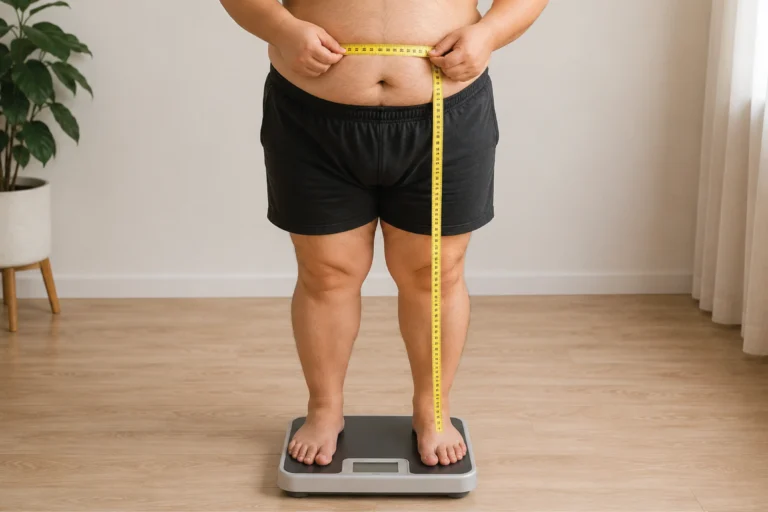
Doctors mostly rely on a measure called Body Mass Index (BMI) to sort people into categories. It is calculated as your weight divided by your height squared. According to the CDC, for people 20 and older, overweight is defined as a BMI between 25 and 29.9, while obesity is defined as a BMI of 30 or higher. Anything below 25 and above 18.5 counts as a healthy weight1. One important qualifier: these thresholds were derived largely from populations of European origin. A WHO expert consultation recommended lower public-health action points for Asian populations — 23 rather than 25, and 27.5 rather than 30 — because the risk of type 2 diabetes and cardiovascular disease is already substantial at a lower BMI2. Indian clinical practice commonly applies lower cut-offs still, so a reader in India may be classified differently than the numbers above suggest.
Now here’s the catch: BMI isn’t perfect. It does not assess body fat directly, though it correlates reasonably well with methods that do. So two people with an identical BMI could carry very different amounts of muscle versus fat. Still, doctors like it because it’s affordable, quick, and doesn’t need any special equipment1.
Overweight vs. Obesity at a Glance
| Parameter | Overweight | Obesity |
| BMI range | 25 to 29.9 | 30 or higher |
| Typical health risk6 | Moderate but measurably elevated; often improvable with sustained lifestyle change9 | Significantly higher, linked to chronic disease |
| Common approach | Diet and activity adjustments | Medical supervision, sometimes medication or surgery |
| Classified as a disease? | Generally, no | Yes, by most major medical bodies |
| Reversibility | Usually achievable with sustained habit change9 | Possible but often needs structured, long-term support |
Obesity Causes: What Leads to Obesity?
People love to blame obesity on laziness or bad willpower. However, the main obesity causes are layered. Genetics, environment, hormones, sleep, stress, medications, and even the gut microbiome can play a role.
Here are some of the main causes of obesity:
- Genetic predisposition, which can make some people more prone to storing fat
- Poor sleep patterns that affect hunger hormones
- A sedentary lifestyle or sitting all day at a desk
- Ultra-processed food diets and sugar-heavy foods
- Certain medications, like antidepressants or steroids
- Underlying conditions such as hypothyroidism or PCOS
Obesity Treatment: What Options Are Available?
There is no single fix, and claims of a one-size-fits-all cure should be treated with caution. Obesity treatment usually blends a few approaches together.
Common approaches include:
- Structured diet changes (not crash diets, sustainable ones)
- Regular physical activity
- Behavioural therapy or counselling
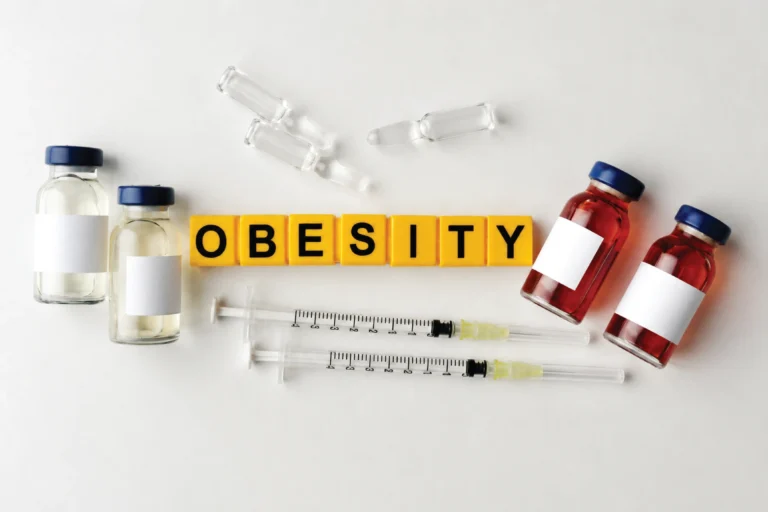
- Prescription medications, including GLP-1 receptor agonists such as Semaglutide, which produced a mean 15.3 kg weight reduction over 68 weeks in a randomised trial3
- Bariatric surgery for severe cases
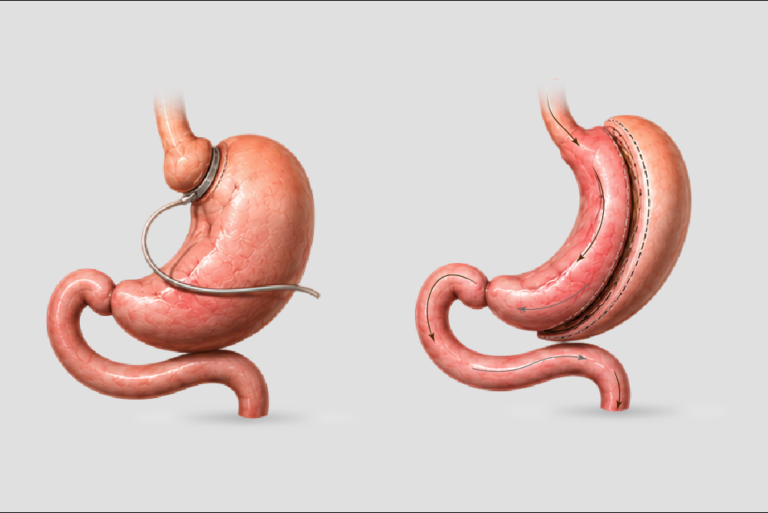
Looking for a treatment option that skips major surgery altogether? The Lap-Band System is minimally invasive, adjustable, and reversible, and it does not alter your digestive anatomy, and has shown durable weight loss in long-term follow-up, with pooled data reporting 45.9% excess weight loss maintained at 10 years or more4. See how Lap-Band compares to other options and take the first step today.
Hitting a Weight Loss Plateau? Here’s Why It Happens
You lose fifteen pounds, feel great, and then… nothing. The scale just sits there, stubborn, for weeks. This is the dreaded weight loss plateau, and nearly everyone trying to lose weight runs into it eventually.
But why does this happen? It happens because your body adapts. As you lose weight, your metabolism slows down somewhat, because a smaller body simply needs fewer calories to function. What worked at the start stops working at the same pace. It’s frustrating, but it’s also completely normal, not a sign that something’s broken7.
A weight loss plateau diet often involves reassessing portion sizes, since calorie needs shrink as weight drops. Some people benefit from cycling calories, others from adjusting protein intake upward to preserve muscle mass.
Sleep and stress deserve attention here too, more than people expect. Poor sleep messes with hunger hormones, and chronic stress raises cortisol, both of which can stall progress even when eating habits look fine on paper. Sometimes the fix isn’t dietary at all.
Final Word
Overweight and obesity aren’t interchangeable words; they’re distinct classifications with different risk profiles and different treatment considerations. Understanding where you or a loved one falls on this spectrum isn’t about shame; it’s about getting the right kind of support. Whether that means addressing root obesity causes, exploring obesity treatment options with a doctor, or simply pushing through a stubborn weight loss plateau diet adjustment, knowledge here genuinely is power.
Excess weight raises your risk for diabetes, heart disease, several cancers, and even severe COVID-19 outcomes8. The Lap-Band Program offers a minimally invasive way to lose weight and keep it off, without altering your anatomy. Sign up today and start your Lap-Band journey.