
In recent years, the conversation around weight loss has changed.
Earlier, when people thought about obesity management, the discussion usually revolved around diet, exercise, and lifestyle changes. Today, with the arrival of GLP-1 medications, a new possibility has emerged which involves achieving meaningful weight loss without undergoing surgery.
For many people living with obesity, this has been life-changing. But it has also raised an important question:
If medications can help people lose weight, is surgery still necessary?
The answer depends on understanding obesity, how weight loss medications work, and what the evidence tells us about long-term outcomes.
Key Takeaways
- Obesity is a chronic, relapsing disease that needs long-term management, not a one-time fix.
- GLP-1 medications deliver meaningful, non-surgical weight loss, but maintaining results often requires ongoing therapy.
- Bariatric surgery, including the adjustable Lap-Band® System, offers substantial, durable weight loss and added metabolic benefits for eligible patients.
- Neither option is universally “better” — the right choice depends on the degree of obesity, overall health, and personal goals.
- Treatment decisions should be personalised and made together with a healthcare professional.
Obesity is more than a weight problem
Obesity is now recognized as a chronic, progressive, and relapsing disease rather than a result of lifestyle choices. The disease is associated with an increased risk of several health conditions, such as type 2 diabetes, cardiovascular disease, fatty liver disease, and obstructive sleep apnea.1
Like other chronic diseases, obesity often requires long-term management. Losing weight is an important step, but maintaining that weight loss and improving overall health are equally important goals.1
This is why choosing an obesity treatment is not only about asking, “How much weight can I lose?”
It is also about asking: “How likely will I be able to maintain the progress and improve my long-term health?”
Why weight-loss medications have changed obesity care
GLP-1 receptor agonists have transformed the approach to medical weight management.
These medications mimic naturally occurring hormones involved in appetite regulation and metabolism. When combined with lifestyle changes, they help:
- Increase feelings of fullness
- Reduce hunger
- Support clinically meaningful weight loss2
For many individuals, medications provide an effective non-surgical option. They may be appropriate for:
- People who prefer medical management
- Those who are not candidates for surgery
- Those who need additional support as part of a broader weight-management plan
However, treatment for obesity often needs to be viewed through a long-term lens.
Clinical evidence shows that stopping GLP-1 therapy may result in weight regain in many individuals. According to the STEP 1 extension study, participants regained weight they had lost after semaglutide was discontinued. This highlights the importance of continued obesity management even after successful weight loss.3,6
Has surgery become outdated?
No — bariatric surgery has not become outdated. The success of GLP-1 medications has led some people to wonder whether bariatric surgery is becoming less relevant.
The evidence suggests otherwise.
In patients with severe obesity, bariatric surgery remains one of the most effective and durable treatment options. Its benefits extend beyond weight reduction:
- Greater weight loss than GLP-1 medications alone in appropriately selected patients4,5
- Complex metabolic changes that can improve obesity-related conditions such as type 2 diabetes and other metabolic disorders4
- Considered a metabolic treatment, not just a weight-loss procedure
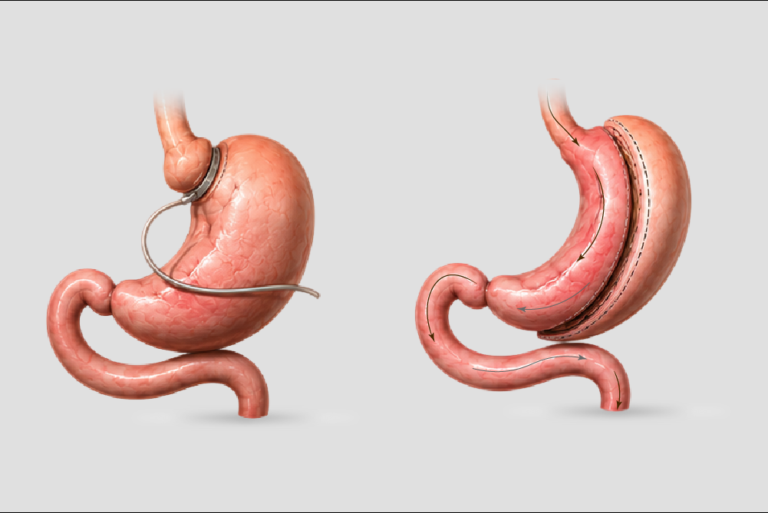
Bariatric surgery is not a single procedure but a group of surgical options that are selected based on an individual’s health profile and treatment goals. One such option is the Lap-Band® System, an adjustable gastric band that may be appropriate for carefully selected patients. Because it is adjustable and removable, it offers a different approach from other bariatric procedures while still supporting long-term weight management when combined with regular follow-up and lifestyle changes.
Medication or surgery: which one is better?
The answer is not the same for everyone. Both are effective, evidence-based tools, and the better option depends on the individual rather than on one treatment being superior overall.
Weight-loss medications offer an important advancement of non-surgical obesity care in attaining meaningful weight loss. However, response to treatment varies, and maintaining results may require ongoing therapy.2,3
Bariatric surgery includes a careful evaluation, a procedure, and lifelong follow-up. However, for eligible individuals, it provides substantial and sustained weight loss with long-term health benefits.4,5
| Consideration | Medication | Surgery |
| How it works | Mimics appetite-regulating hormones to curb hunger and increase fullness. | Alters the digestive system to reduce intake and drive metabolic change. |
| Weight loss | Meaningful when combined with lifestyle changes. | Substantial, often greater in suitable patients. |
| Durability | Regain is common if therapy stops. | Substantial and sustained long-term. |
| Wider health benefits | Mainly through weight loss. | Can improve type 2 diabetes and other metabolic conditions. |
| Commitment | Ongoing, usually long-term. | Evaluation, a procedure, and lifelong follow-up. |
| Best suited for | Those who prefer medical management or aren’t surgical candidates. | Severe obesity, or obesity with serious health conditions. |
| Adjustability | Can be stopped, but weight often returns. | Varies by procedure; the Lap-Band® System is adjustable and removable. |
Rather than viewing medication and surgery as competing options for weight loss, they should be considered as two different tools within the broader management of obesity.

Choosing the right treatment approach
The most appropriate treatment depends on several factors, which include:
- Degree of obesity
- Existing medical conditions
- Previous weight-loss efforts
- Treatment preferences
- Long-term health goals
In some individuals, medication may provide the support needed to achieve and maintain weight loss. While for some others, surgery may offer a more effective and durable option, particularly when obesity is severe or associated with significant health complications.4
The future of obesity care is moving toward personalized treatment, where decisions are based on an individual’s medical needs rather than a one-size-fits-all approach.5
Looking beyond the number on the scale
The question is not simply:
“Which treatment causes more weight loss?”
The more important question is:
“Which treatment gives this person the best chance of better long-term health?”
GLP-1 medications have expanded the possibilities of medical weight management. Bariatric surgery continues to provide a powerful and evidence-supported option for individuals who need a more intensive intervention.
Ultimately, successful obesity treatment is not about choosing between medication or surgery. It is about choosing the right approach for the right patient at the right stage of their health journey.
References
- Louis, M., & Velazquez, E. (2025). The Impact of New Weight-Loss Medications on Bariatric Surgery and Surgeon Employment. Cureus, 17(5), e83903. https://doi.org/10.7759/cureus.83903
- Johns Hopkins Medicine. Bariatric surgery vs. GLP-1s: Comparing weight loss treatments [Internet]. Baltimore (MD): Johns Hopkins Medicine; [cited 2026 Aug 3]. Available from: https://www.hopkinsmedicine.org/health/treatment-tests-and-therapies/bariatric-surgery/bariatric-surgery-vs-glp1
- Finer N. (2025). Pharmacotherapy and metabolic/bariatric surgery: either or both?. International journal of obesity (2005), 49(10), 1897–1898. https://doi.org/10.1038/s41366-025-01897-0
- Barrett, T. S., Hafermann, J. O., Richards, S., LeJeune, K., & Eid, G. M. (2025). Obesity Treatment With Bariatric Surgery vs GLP-1 Receptor Agonists. JAMA surgery, 160(11), 1232–1239. https://doi.org/10.1001/jamasurg.2025.3590
- American Society for Metabolic and Bariatric Surgery. Head-to-head study shows bariatric surgery superior to GLP-1 drugs for weight loss. Available from: https://asmbs.org/news_releases/head-to-head-study-shows-bariatric-surgery-superior-to-glp-1-drugs-for-weight-loss/
- Wilding, J. P. H., Batterham, R. L., Davies, M., et al. (2022). Weight regain and cardiometabolic effects after withdrawal of semaglutide: The STEP 1 trial extension. Diabetes, Obesity & Metabolism, 24(8), 1553–1564. https://doi.org/10.1111/dom.14725
- Himpens, J., Cadière, G. B., Bazi, M., Vouche, M., Cadière, B., & Dapri, G. (2011). Long-term outcomes of laparoscopic adjustable gastric banding. Archives of Surgery, 146(7), 802–807. https://jamanetwork.com/journals/jamasurgery/fullarticle/1107072